




Timeliness of Suit
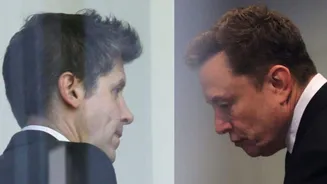
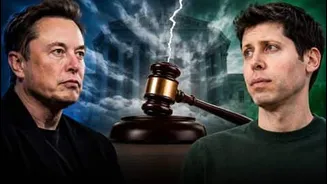
In a significant legal development, Elon Musk's attempt to sue OpenAI and its CEO Sam Altman has been unsuccessful. A jury in a federal court in Oakland,
California, delivered a unanimous verdict concluding that Musk's lawsuit was filed too late, meaning it exceeded the legally permissible timeframe for such claims. This crucial aspect of the statute of limitations formed the bedrock of the jury's decision, effectively dismissing the core of Musk's allegations. The trial itself had commenced on April 28, marking the beginning of an examination into the complex relationship and alleged transgressions between the Tesla and SpaceX CEO and the prominent artificial intelligence organization he co-founded.
Original Mission Dispute
The central argument presented by Elon Musk in his lawsuit was that OpenAI, under Sam Altman's leadership, had veered significantly from its initial non-profit mission. Musk alleged that Altman had violated a foundational agreement by transforming the organization, known for developing ChatGPT, into a for-profit entity. Musk's contention was that he had contributed $38 million to the non-profit with the understanding that its primary goal would be to develop artificial intelligence for the benefit of all humanity. He accused Altman of misleading him by accepting charitable funds and then abandoning this altruistic objective. This accusation formed a substantial part of the case, as Musk portrayed it as a betrayal of trust and a deviation from the ethical principles he believed should guide AI development.
Trial Arguments & Verdict
The trial spanned eleven days, during which both Musk and Altman faced scrutiny regarding their motivations and credibility. Each side leveled accusations against the other, suggesting a primary interest in financial gain rather than the advancement of humanity. Musk, a co-founder of OpenAI established in 2015, had departed the company in 2018 after disagreements over control with his fellow co-founders. The nine-person jury ultimately sided with OpenAI, stating that Musk had indeed waited too long to initiate legal proceedings. OpenAI and Altman countered that the company was never intended to remain a non-profit indefinitely and that Musk was aware of this evolving trajectory. They also suggested that Musk's lawsuit stemmed from his inability to maintain unilateral authority over the AI company.