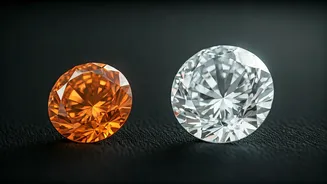







Nature's Ancient Gemstone
Imagine a gemstone with a lineage stretching back over four billion years – that’s zircon! This natural marvel is extracted directly from the earth, boasting
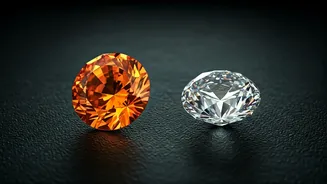
a rich geological history. Chemically identified as zirconium silicate, zircon possesses a remarkable refractive index, allowing it to capture and reflect light with a brilliance reminiscent of diamonds. A truly unique characteristic is its double refraction; when light passes through, it splits into two rays, potentially making the back facets appear doubled upon close inspection, a phenomenon absent in diamonds. While colorless zircon is a popular diamond substitute, it also occurs naturally in attractive earthy hues like yellow, brown, and red, and can be transformed into a vibrant blue through heat treatment. However, in terms of hardness, it rates between 6.5 to 7.5 on the Mohs scale, making it somewhat susceptible to chips and scratches compared to more robust stones.
The Lab-Created Imposter
In India, the term 'American diamond' typically refers to cubic zirconia (CZ), a synthetic gemstone meticulously engineered in laboratories to mimic the appearance of a natural diamond. This creation process offers complete control, resulting in a stone that is almost invariably flawless, free from any natural inclusions or imperfections. Cubic zirconia exhibits single refraction, which contributes to its sharp, distinct sparkle. It's also celebrated for its intense 'fire' – the spectacular rainbow-colored flashes that erupt when light strikes the stone, often appearing more vibrant than even real diamonds. Critically, cubic zirconia triumphs in durability, scoring 8 to 8.5 on the Mohs hardness scale, making it significantly more resistant to wear and tear for daily use. Its mass production also ensures affordability, solidifying its position as a dominant choice in the imitation jewelry market.
Distinct Origins, Different Sparkle
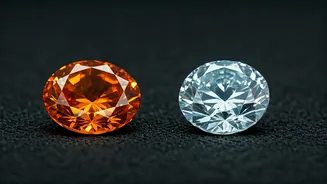
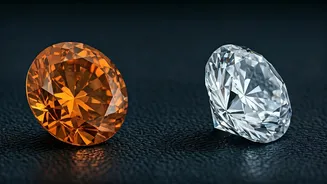
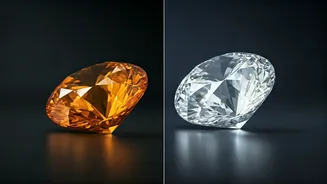
While both zircon and cubic zirconia serve as accessible stand-ins for genuine diamonds, their similarities largely end at their dazzling appearance. Their fundamental differences lie in their origins and compositions. Zircon is a product of natural geological processes, whereas American diamonds (cubic zirconia) are entirely man-made in controlled environments. This difference in genesis dictates their physical properties and how they interact with light. Zircon's natural variability means it can possess unique characteristics like double refraction, while cubic zirconia's engineered nature leads to consistent perfection and intense, sometimes exaggerated, sparkle. Understanding these distinctions is crucial for appreciating what you're purchasing, whether you're drawn to the ancient allure of a natural gem or the modern perfection of a lab-created marvel.