




Oven Method Revealed
The oven method, one of the initial approaches explored, presented a baseline for comparison. This technique offered a controlled environment for the brisket
to cook, allowing for even heat distribution. Though not detailed in the original source, understanding the oven method is crucial as a benchmark. The oven's capability to maintain consistent temperatures often leads to predictable results, making it a reliable option for those seeking tender, evenly cooked brisket. This technique offers a traditional approach, providing a familiar point of comparison for the subsequent slow-cooker experiments, helping in evaluating the effectiveness of each technique.
Dump-and-Stir Simplicity
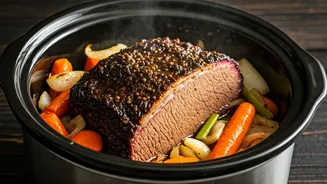
The 'Dump-and-Stir' slow cooker approach epitomized ease, focusing on minimal effort. This method involved placing ingredients directly into the slow cooker without preliminary steps. This straight forward method highlights the slow cooker's convenience. The simplicity of this method underscores its suitability for busy individuals who want delicious results without extensive preparation. The dump-and-stir approach simplifies the cooking process, thereby offering a more accessible way to enjoy brisket without extensive preparation. This highlights the slow cooker’s advantage in terms of time-saving and minimal effort, which is an important consideration for many home cooks.
Sear & Sauté Strategy
The 'Sear Brisket and Sauté Vegetables' method represents a more involved technique, aiming to boost flavor through pre-cooking steps. This included searing the brisket to create a flavorful crust and sautéing vegetables to build depth of flavor. The additional steps aim to create a richer, more complex taste profile. By searing the brisket, the method aims to enhance the Maillard reaction, developing deeper, more appealing flavors. Sautéing the vegetables further contributes to flavor development, infusing the brisket with complementary tastes. The aim of this method is to blend convenience with maximum flavor, providing a balanced approach.
Parameters of Testing
To find the best method, tests were set up to thoroughly evaluate the various methods. The original article likely used parameters like cooking time, internal temperature, and tenderness, alongside flavor and overall quality. Such parameters are vital for assessing how each method performs. These tests help determine which method truly unlocks the brisket's full potential, ensuring a consistent and delicious outcome every time. Carefully designed tests allowed for an objective comparison of different techniques, guaranteeing insights into the most effective ways to slow-cook brisket. By meticulously analyzing the outcomes, it would be possible to accurately determine the best approach.
The Takeaway: Verdict
The ultimate goal was to identify the best slow-cooker method for brisket. The test aimed at determining the optimal way to cook brisket in a slow cooker. The insights gained from the comparative analysis would enable home cooks to select the method that best suited their preferences and time constraints. Whether the dump-and-stir, the sear-and-sauté, or the oven method ultimately proved superior, the findings would guide cooking practices. The conclusion would reveal which method delivers the most flavorful, tender brisket, and the simplest route to achieving it, thus equipping readers with the essential knowledge.