








New Tunnel Ready
A crucial segment of the expansive Delhi-Mumbai Expressway has reached completion with the finishing of a new tunnel close to Kota. This engineering feat
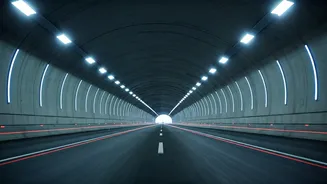
is poised to drastically shorten the travel duration between major metropolitan areas. The highlight is the brand-new 8-lane tunnel situated in the Mukundara Hills region near Kota, Rajasthan. Spanning approximately 4.9 kilometers, this tunnel is an integral part of the larger expressway project and is anticipated to commence operations very shortly, potentially within the next month. Its construction effectively replaces a challenging 25-kilometer stretch of hilly terrain that previously necessitated slower speeds and navigated numerous curves. By offering a direct, unimpeded passage, the tunnel promises to significantly enhance travel efficiency and comfort for all users.
Gurugram-Vadodara Time Cut
The most impactful change brought about by this new infrastructure is the substantial reduction in travel time between Gurugram and Vadodara. Previously, this journey would consume an estimated 20 to 22 hours, a lengthy duration attributed to a combination of extended routes and sections that naturally slowed down traffic. However, with the full completion of the expressway, including the newly finished tunnel, this travel time is expected to be slashed to just 10 to 12 hours. This represents an almost 50% decrease in the time required to cover the same distance, offering a much smoother and considerably faster driving experience for commuters and commercial transport alike.
Expressway Overview
To understand the significance of the Kota tunnel, it's helpful to view it within the context of the entire Delhi-Mumbai Expressway project. This ambitious undertaking is designed as an 8-lane greenfield expressway, stretching a total of 1,380 kilometers. It facilitates direct connectivity between North and West India, linking key cities such as Delhi, Gurugram, Jaipur, Kota, Indore, Ahmedabad, Vadodara, and Mumbai. The expressway is being developed in distinct phases. A notable feature, beyond the Kota tunnel, is its high speed limit, allowing vehicles to travel up to 120 km/h, contributing to its overall efficiency.
Tunnel's Significance
The importance of the Kota tunnel extends beyond merely accelerating travel times; it addresses specific navigational and environmental challenges present in the original route. The previous winding roads through hilly areas led to slow-moving traffic, increasing journey durations and fuel consumption. The new tunnel provides a straight and efficient path, mitigating these issues. This direct route not only saves fuel but also enhances safety by reducing the complexity of the road. Furthermore, the tunnel's design has incorporated considerations for local wildlife, ensuring that animal movement corridors are not disrupted, which is particularly crucial for the ecological balance of the Mukundara Hills region.
Project Progress
The Delhi-Mumbai Expressway project is steadily moving towards its full completion, with numerous sections already operational or nearing readiness. The stretch connecting Vadodara to Mumbai is expected to open in the near future, with other segments being unveiled in phases. Looking ahead, there's a potential plan to expand the expressway from its current 8 lanes to 12 lanes if future traffic demands necessitate it. Upon its final completion, this expressway is set to become one of India's most vital transportation arteries, fundamentally altering long-distance travel and logistics within the country.
Property Market Impact
The development of major infrastructure projects like the Delhi-Mumbai Expressway typically stimulates economic activity, including a rise in property demand in adjacent areas. Improved connectivity and reduced travel times make locations that were once considered distant more accessible and attractive for residential and commercial purposes. Consequently, areas along the expressway, such as Gurugram, are likely to see sustained interest in real estate, particularly in flats. Cities like Jaipur, Kota, Indore, and Ahmedabad may also experience a gradual increase in housing demand over time as connectivity enhances their appeal. For property investors, regions undergoing early-stage infrastructure development often present growth opportunities, with accessibility being a key driver of property value appreciation.
Traffic and Usage
The Delhi-Mumbai Expressway has been meticulously designed to accommodate substantial traffic volumes, with an anticipated daily usage of approximately 25,000 to 30,000 vehicles. It functions as a high-speed corridor equipped with controlled entry and exit points to ensure smooth and safe transit. The engineering of the expressway also incorporates provisions for future expansion, anticipating increased traffic flow and the potential need for additional lanes, suggesting a long-term vision for its capacity.