





Vision for Health
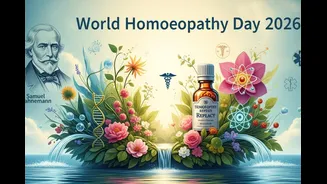
The recent two-day World Homoeopathy Day 2026 celebrations in New Delhi culminated with a significant emphasis on weaving homoeopathy more deeply into
the fabric of general healthcare systems. Policymakers, researchers, and practitioners converged to collaboratively define a progressive pathway for the field. Operating under the overarching theme of 'Homoeopathy for Sustainable Health' and inspired by the vision of 'Infinite Possibilities,' the convention hosted at Vigyan Bhawan served as a crucial platform for senior officials from the Ministry of Ayush, alongside leading experts and institutional representatives. The core discussions revolved around driving clinical progress, refining policy structures, identifying key research imperatives, and enhancing homoeopathy's expanding contribution to providing healthcare that is both readily accessible and highly focused on the individual patient's needs. This gathering underscored a collective ambition to elevate homoeopathy's profile and effectiveness within the national health landscape.
Government's Commitment
During the concluding session, Alarmelmangai D., Joint Secretary at the Ministry of Ayush, emphatically restated the government's unwavering dedication to fortifying the position of homoeopathy within the broader healthcare ecosystem. Her address highlighted the substantial potential homoeopathy holds for fostering healthcare systems that are not only sustainable but also inherently integrative across the entirety of India. The event commenced with an introductory address by Dr Sunil S. Ramteke from the Central Council for Research in Homoeopathy (CCRH). Subsequently, comprehensive overviews of the intensive deliberations were provided by Dr Pralay Sharma of the National Institute of Homoeopathy (NIH), Dr Subhash Kaushik, the Director General of CCRH, and Dr Tarkeshwar Jain, Chairperson of the National Commission for Homoeopathy (NCH). These summaries effectively encapsulated the critical scientific discussions and key policy insights gleaned from the comprehensive two-day proceedings, setting a clear direction for future initiatives.
Acknowledging Excellence
A significant aspect of the convention involved the formal recognition of outstanding achievements within the homoeopathic community. Esteemed individuals, including Dr Nandini Kumar, the Padma Shri recipient Dr V.K. Gupta, and Dr Kalyan Bannerjee, were presented with honours, celebrating their profound contributions to the field. Furthermore, the event spotlighted the emerging talent by acknowledging approximately 90 students, including those who received STSH and MD awards. This recognition serves as a powerful testament to the growing and vibrant cohort of young practitioners poised to shape the future of homoeopathy, indicating a healthy pipeline of skilled professionals ready to engage with contemporary healthcare challenges and advancements.
Day One Focus
The inaugural day of the convention delved into critical areas such as ethical practices, the pursuit of clinical excellence, and the exploration of nascent research frontiers. A pivotal plenary session strongly emphasized the paramount importance of professional integrity, aligning with the guidelines set forth by the NCH Regulations of 2022. The National Institute of Homoeopathy (NIH) showcased compelling evidence-based case studies, detailing successful treatments for complex ailments including brain tumours, various autoimmune disorders, and endometriotic cysts. Simultaneously, specialized sessions meticulously examined advancements in paediatric homoeopathy, introduced novel remedies like Cassia fistula, and explored the innovative applications of agro-homoeopathy within the agricultural sector. A noteworthy multidisciplinary discussion brought together experts from conventional modern medicine to collaboratively chart synergistic approaches to patient care and management.
Day Two Agenda
Transitioning to its second day, the convention’s agenda shifted its focus towards policy development, regulatory frameworks, and the broader implications of global integration for homoeopathy. Key sessions were dedicated to examining the strategic expansion of community healthcare services and reinforcing the integrity and transparency of the National Register of Homoeopathy. Experts in attendance also underscored the critical necessity for robust drug standardisation protocols and proactive pharmacovigilance measures to unequivocally ensure the safety and well-being of all patients. Further discussions thoughtfully explored homoeopathy's intended placement within the World Health Organization's Traditional Medicine Strategy, carefully weighing both the significant global opportunities that lie ahead and the potential challenges that may arise. Emerging fields such as veterinary homoeopathy and the strategic application of scientific innovation to address pressing issues like antimicrobial drug resistance were also subjects of in-depth deliberation.
Future Priorities
A high-level session, spearheaded by the Ministry of Ayush and the Central Council for Research in Homoeopathy (CCRH), meticulously outlined the strategic priorities and charted the future trajectory for research and institutional development within the field of homoeopathy. This crucial discussion aimed to align efforts and resources towards achieving the sector's long-term objectives. The convention concluded on a note of reinforced commitment and collective resolve to propel the homoeopathic sector forward. This advancement is envisioned through enhanced collaboration among stakeholders, targeted capacity-building initiatives, and a sustained focus on rigorous research. The overarching goal is to solidify homoeopathy's essential role as a fundamental pillar supporting both integrative and sustainable healthcare systems throughout India, ensuring its continued relevance and efficacy.