



What Is A Blue Moon?
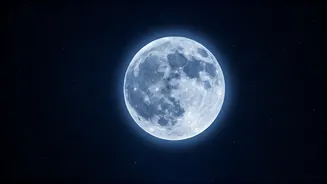
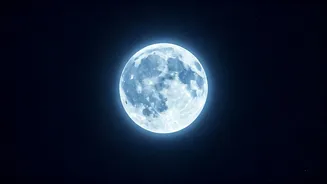
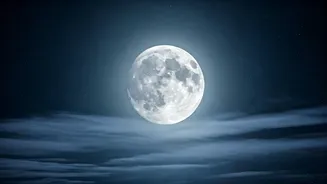
Contrary to its name, a Blue Moon doesn't signify a change in the Moon's color to blue. Instead, it's a special designation for a full moon that occurs
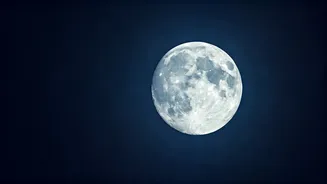
under specific, infrequent circumstances. The most common understanding of a Blue Moon is the second full moon within a single calendar month. Less frequently, it can refer to the third full moon in a season that happens to have four full moons instead of the usual three. While atmospheric conditions involving dust or ash can occasionally lend the Moon a bluish hue, this is a separate phenomenon from the calendrical definition of a Blue Moon. The upcoming Blue Moon on May 31, 2026, will adhere to the more prevalent definition, being the second full moon of that month.
Blue Moon in India
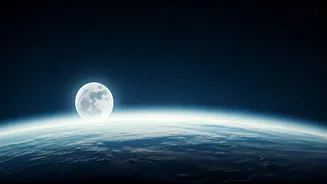
The highly anticipated Blue Moon event on May 31, 2026, is set to be a visible spectacle for observers in India. The celestial alignment means that people across the country will have the opportunity to witness this rare full moon. While the exact timing of the peak occurrence is around 8:45 UTC, the Moon will be observable in the Indian sky during the night of May 30th to May 31st, 2026. For the best viewing experience, it is recommended to find a location away from urban light pollution with an unobstructed view of the eastern horizon. The Moon will rise shortly after sunset, offering a clear and bright appearance for several hours into the evening.
Viewing Tips & Micromoon
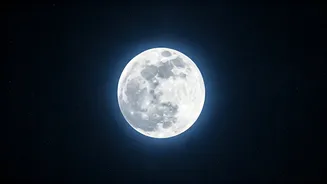
The Blue Moon of May 31, 2026, presents a fantastic opportunity for stargazers in India. To make the most of this event, seek out open spaces with minimal light interference, such as parks or rural areas. Begin your observation just as the sun sets and the Moon begins to ascend the eastern horizon. While no special equipment is necessary to enjoy the sight of this full moon, binoculars can offer a more detailed view of its surface features. Interestingly, this particular Blue Moon will also be classified as a micromoon. This means it will be at its farthest point from Earth in its orbit, causing it to appear slightly smaller in the sky than a typical full moon.