






Pilot Training Excellence
The foundation of flight safety rests firmly on the shoulders of exceptionally trained pilots. Aspiring aviators undergo an extensive initial conditioning
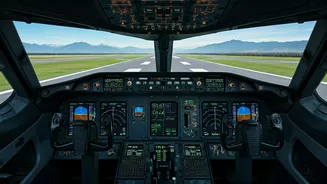
period, a process that isn't just about acquiring skills but about building a deep-seated proficiency. This rigorous preparation doesn't end with the initial license; it's a continuous journey. Pilots like Captain Sangay Wangchuk, who operates in demanding environments like Bhutan's Paro International Airport, regularly participate in recurrent training and proficiency checks. These sessions, often held in specialized facilities, ensure that their skills remain sharp and that they are adept at handling any situation, from routine operations to emergency scenarios. The emphasis is not solely on innate talent, but on the persistent dedication to ongoing education and practice. Furthermore, even with advanced automation, the human element remains paramount. Pilots are trained to meticulously monitor automated systems, understanding precisely when to intervene and take manual control, ensuring a seamless blend of technological assistance and human judgment for optimal flight management.
Advanced Aircraft Safeguards
Modern aircraft are marvels of engineering, designed with multiple layers of redundancy to maximize safety. These sophisticated machines incorporate a 'protection envelope,' a comprehensive system that includes backup electrical generators and hydraulic systems, typically numbering three or four. This design philosophy means that most potential failures have already been anticipated and engineered against, creating a highly resilient flying experience. For instance, if an aircraft inadvertently banks beyond a certain limit, such as 45 degrees, the aircraft's systems will automatically correct its attitude. Similarly, pilots are prevented from intentionally stalling the aircraft by these built-in safeguards. The synergy between human pilots and these advanced systems is crucial, with safety being the non-negotiable top priority. Beyond passenger visibility, pilots utilize a suite of tools, including weather radar and real-time updates from other aircraft and ground control, to make informed decisions about altitude and routing, often adjusting to avoid turbulence and ensure a smoother journey.
Variability and Safety
Every flight, even along the same route, presents a unique set of conditions, a reality that underscores the dynamic nature of aviation. Factors such as wind speed and direction, atmospheric pressure, and immediate weather patterns can change significantly from one flight to another, meaning no two days in the air are ever identical. This inherent variability is precisely why pilots are trained to adopt a conservative approach, prioritizing safety above all else. If the prevailing conditions are deemed unfavorable or pose any potential risk, pilots are not only permitted but strongly encouraged to make decisions that uphold safety standards, which may include diverting the flight path, delaying departure, or even canceling the flight altogether. While these decisions can sometimes lead to passenger inconvenience, they are direct manifestations of the safety systems in action, ensuring that flights only proceed when all indicators confirm a secure environment for travel.
Alerts as Protective Measures
The alarms and alerts heard within an aircraft cockpit, such as 'Terrain. Pull up,' are not indicators of impending disaster but rather affirmations that the sophisticated safety systems are functioning precisely as intended. These alerts are integral components of the aircraft's 'protection envelope,' designed to provide timely warnings and facilitate immediate corrective actions. When a pilot, like Captain Sangay Wangchuk with decades of experience, hears such a warning, it signals that the aircraft's built-in safeguards are actively engaged and performing their crucial role. For passengers, experiencing cabin vibrations or hearing chimes might trigger apprehension, but understanding that these are the visible signs of the multilayered safety net in operation can provide reassurance. It signifies that the pilots and the aircraft are working in unison, diligently monitoring the environment and responding proactively to ensure the safest possible flight.