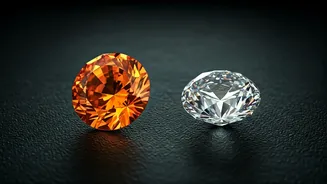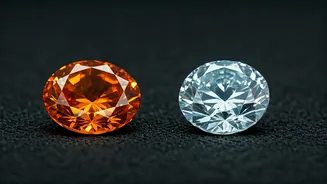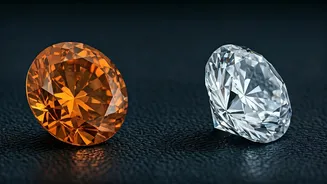





The Natural Wonder: Zircon
Zircon, a truly ancient gem, boasts an impressive natural lineage, with some specimens dating back over four billion years, making it one of the oldest
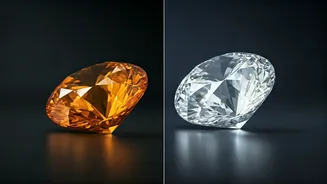
minerals known to humankind. Chemically identified as zirconium silicate, it possesses a remarkable refractive index that allows it to capture and reflect light with a brilliance akin to diamonds. A unique characteristic of zircon is its double refraction; when light passes through the stone, it splits into two distinct rays, often making the rear facets appear doubled upon close inspection, a phenomenon not observed in diamonds or most other gemstones. While the colorless variety is frequently chosen as a cost-effective substitute for diamonds, zircon also occurs naturally in a spectrum of earthy hues, including yellow, brown, and red. Furthermore, through precise heat treatments, it can be transformed into a striking blue gemstone. However, in terms of durability, zircon ranks a respectable 6.5 to 7.5 on the Mohs hardness scale. While reasonably resilient, it is somewhat brittle and susceptible to chipping if subjected to a significant impact or sharp blow, requiring careful handling during wear.
The Lab-Created Gem: American Diamond
When discussing 'American diamond' in India, the reference is almost invariably to cubic zirconia (CZ), a synthetic gemstone meticulously engineered in laboratories to emulate the appearance of a diamond. Unlike zircon, cubic zirconia has no ties to the natural world; its creation occurs under precisely controlled environmental conditions utilizing zirconium dioxide. This controlled manufacturing process ensures an exceptionally high degree of perfection, resulting in stones that are virtually flawless, free from any internal inclusions or surface imperfections. Cubic zirconia also interacts with light differently than zircon. It exhibits single refraction, which contributes to its sharp, clean sparkle. It is also renowned for its intense 'fire,' manifesting as vivid rainbow flashes when light strikes the stone. In some instances, its sparkle can even exceed that of a natural diamond, appearing almost *too* brilliant. However, its primary advantage, aside from its affordability due to mass production, lies in its superior durability. Ranking between 8 and 8.5 on the Mohs scale, cubic zirconia is considerably harder and more resilient than zircon, making it an excellent choice for everyday wear. This combination of dazzling appearance, toughness, and economic viability explains its widespread popularity in fashion jewelry.