






Bladderworts: Aquatic Ambushes
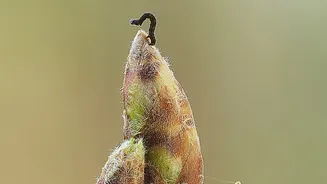
Bladderworts are incredibly swift, aquatic organisms that have developed a unique method for capturing prey. They utilize tiny, hollow bladder-like structures
that function as miniature suction traps. These bladders rapidly engulf small organisms like insect larvae, water fleas, and aquatic worms as they swim by. The speed at which these traps operate is among the fastest observed in the plant kingdom, making bladderworts particularly formidable hunters in aquatic environments such as ponds and waterlogged soils. Their survival hinges on their ability to snatch prey from the water column, a testament to their evolutionary ingenuity in overcoming nutrient scarcity.
Sundews: Sticky Dew Traps
Sundews are characterized by their leaves, which are adorned with numerous minuscule glands resembling droplets of morning dew. These glistening secretions serve a dual purpose: they are highly attractive to unsuspecting insects, and they are incredibly sticky. Once an insect makes contact and becomes ensnared in these adhesive droplets, the sundew's leaf slowly curls around its prey. The plant then proceeds to digest the captured insect, absorbing the vital nutrients it needs. Sundews are typically found in habitats such as bogs and acidic soils, environments notorious for their lack of essential soil nutrients, which drives these plants to adopt such specialized predatory lifestyles.
Butterworts: Gnat-Snatching Leaves
Butterworts possess soft, pliable leaves that are covered in a sticky mucilage, effectively acting as flypaper for very small insects. Delicate creatures such as gnats and fruit flies are easily trapped when they alight upon these surfaces. Once an insect is stuck, the butterwort's leaf begins to release digestive enzymes, breaking down the prey to absorb nutrients. These plants are generally small and delicate, thriving in damp environments where an abundance of small flying insects provides a consistent food source. Their subtle yet effective trapping mechanism allows them to thrive where nutrient availability in the soil is limited.
Pitcher Plants: Deadly Depths
Pitcher plants employ a more passive but equally effective trapping strategy, utilizing modified leaves that form deep, pitcher-like structures filled with a digestive fluid. Insects are lured to these pitchers, often by the allure of nectar, but once they enter, they find themselves in a perilous situation. The slippery inner walls of the pitcher cause them to lose their footing and fall into the pool of liquid at the bottom, where they drown. Some species, particularly within the Nepenthes genus, are large enough to capture not only insects but also small vertebrates like rodents, showcasing the diverse scale of predation in these remarkable plants.
Cobra Lily: Hooded Hunter
The Cobra Lily, also known as the California Pitcher Plant, presents a striking appearance reminiscent of a raised snake's head, complete with a hood. This distinctive shape plays a crucial role in its predatory strategy. Insects are drawn into the hooded opening, attracted by visual cues or enticing scents. However, the interior of the pitcher is designed to make escape extremely difficult; its slippery surfaces and the downward-pointing hairs prevent insects from climbing out. This plant is endemic to the boggy regions of northern California and southern Oregon, environments that often have nutrient-depleted soils, necessitating its carnivorous adaptations.
Waterwheel Plant: Underwater Traps
The Waterwheel Plant is an aquatic marvel, floating freely on the water's surface while deploying an array of tiny underwater traps. These specialized structures are designed to capture minute aquatic organisms such as mosquito larvae and other small invertebrates. Its free-floating nature allows it to drift with water currents, positioning itself optimally for prey capture. When a small creature blunders into one of its traps, the mechanism closes with remarkable speed, securing the meal. The Waterwheel Plant is considered a rare and endangered species, highlighting the fragility of specialized ecosystems.
Venus Flytrap: Iconic Snap
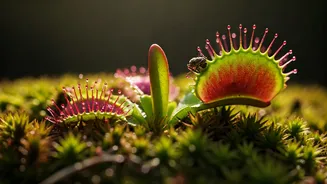
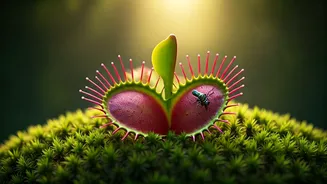
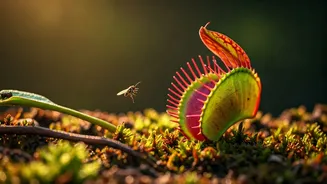
The Venus Flytrap is arguably the most iconic of all carnivorous plants, renowned for its dramatic and rapid trapping mechanism. Its leaves are hinged and possess highly sensitive trigger hairs on their inner surfaces. When an unsuspecting insect, or sometimes even a small spider, touches two or more of these hairs in succession, the leaf blades snap shut with astonishing speed, imprisoning the prey. The plant then secretes digestive enzymes to break down its catch and absorb the nutrients. Primarily feeding on insects, the Venus Flytrap's efficient predatory system is a classic example of adaptation to nutrient-deficient environments.