






Power Dressing in Black
Donning black attire in a professional environment can significantly alter one's self-perception and how they are perceived by others. When individuals
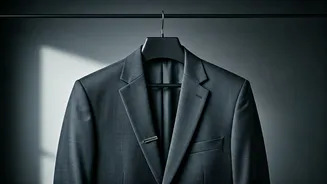
choose black for work, they often report feeling a heightened sense of competence, authority, and trustworthiness from the outset. This phenomenon is rooted in psychology, specifically 'enclothed cognition,' where clothing choices influence mental states and performance. Studies in formal workplace settings have shown that formal attire, including black, correlates with employees feeling more capable and performing better under pressure. In essence, the clothing acts as a psychological catalyst, shifting an individual's mindset towards readiness and self-assurance. This effect is so pronounced that, in initial judgments during job interviews or professional settings, black is the color most strongly associated with confidence and reliability, often preceding an actual assessment of an individual's abilities.
The Hidden Emotional Signal
Beyond the projection of power, the consistent choice of black clothing can also reveal deeper emotional undercurrents. Research indicates that individuals who frequently opt for black may be seeking a form of emotional protection. While black can undoubtedly make one feel more commanding, it's also linked to a desire for shielding oneself from external pressures or internal turmoil. A study involving women found a notable correlation: those identifying as regular black wearers were nearly three times more prone to experiencing frequent anxiety. Similarly, individuals prone to worry or a melancholic disposition were twice as likely to adopt black as their standard workwear. This suggests that for some, black is not just a fashion statement but a psychological buffer, a way to create a barrier against the demands of the world, especially when feeling emotionally drained or vulnerable.
Black as a Protective Cocoon
The protective aspect of wearing black often stems from its association with negative emotions like sadness, depression, and fear, though it doesn't cause these feelings directly. Instead, individuals struggling with anxiety, mood disorders, or emotional fatigue may gravitate towards black because it feels like a suit of armor, a shield against a world perceived as overly demanding. It can offer a sense of comfort and refuge for those feeling isolated or depleted. However, this reliance on black for emotional defense can inadvertently create a self-imposed confinement. Habitually using black as a shield can signal to the nervous system a constant need for vigilance, potentially keeping the amygdala in a heightened state of alert and perpetuating a low-level threat response. This raises a critical question: is the embrace of black a reflection of flourishing professional success, or a coping mechanism for underlying struggles, allowing one to metaphorically disappear?