






Empty It All Out
Begin your spring cleaning mission by completely emptying your refrigerator and freezer. This foundational step allows for a comprehensive inventory of
all contents, revealing precisely what you have and what needs to be addressed. By taking everything out, you create a clean slate, enabling a thorough assessment of food items and providing unobstructed access to clean the interior surfaces without any obstructions.
Assess Leftovers Ruthlessly
With all food items laid bare, it's time to critically evaluate your leftovers. Adhering to food safety guidelines, it's recommended to consume leftovers within a limited timeframe of one to three days. Even if food appears visually sound, the potential presence of harmful bacteria like Listeria cannot be disregarded. When in doubt, it is always safer to discard suspect items to prevent illness. Consider local composting initiatives if food waste is a concern, but prioritize safety over potential waste.
Condiment Check-Up
Your fridge door often becomes a graveyard for open condiments. It's crucial to understand their shelf life after opening. For instance, cocktail sauce, chili sauce, and ketchup generally last about six months, while mustard can remain viable for up to twelve months. Other items like chutney have a shorter window of one to two months, and olives should be used within two weeks. Regularly inspecting these items prevents spoilage and ensures you're using them at their best.
Expiration Date Savvy
Decoding food dates is essential. The dates printed on packaging, such as 'Best if Used By' or 'Sell By,' primarily indicate peak quality or store inventory management, not strict safety deadlines (except for infant formula). For a reliable guide on food safety, consult resources that detail how to identify spoilage. Visually, look for signs of mold—any green, white, black, or blue coloration typically signals the need for disposal, though mold can be cut from hard cheeses.
Identify Freezer Burn
Freezer burn is a sign of irreversible dehydration and quality loss in frozen foods. Look for the formation of ice crystals on the food's surface, which is the most common indicator. Beyond crystals, observe for dulling in color, especially in meats which may turn grey-brown. Textural changes are also key: meat can become leathery, and baked goods might develop a rough exterior. Produce may appear shriveled and dry. Utilize official guidelines for safe freezer storage durations.
Choose Cleaning Agents Wisely
Effective fridge cleaning doesn't require harsh chemicals. A mild dish soap diluted in warm water, a gentle all-purpose cleaner, or a solution of white vinegar and water are excellent choices. Avoid abrasive or strongly scented products like bleach and ammonia. For persistent odors, a mixture of equal parts vinegar and water can be highly effective in neutralizing smells and leaving your fridge fresh.
Deep Clean Interior
With the interior accessible, it's time for a thorough wipe-down. Use your chosen cleaning solution to meticulously clean all surfaces, including doors, seals, handles, walls, and floors. For optimal cleaning, remove shelves and drawers. Wash these components separately in warm, soapy water, ensuring they are completely dried before reinsertion to prevent the growth of mildew. This meticulous approach ensures a hygienic environment.
Smart Reorganization Strategies
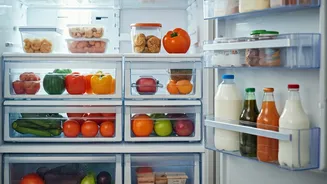
Now that your fridge is sparkling, reorganize its contents for optimal freshness and visibility. Group similar items together, such as dairy, produce, meats, and leftovers. Place the coldest items, typically raw meats and dairy, on the bottom shelf. Create an 'eat first' zone for items nearing their expiry date. Utilizing clear bins and rotating shelves can also enhance visibility and accessibility, preventing items from being forgotten and leading to waste.
Ongoing Maintenance Habits
Maintain your newly cleaned fridge with consistent habits. Labeling leftovers with names and dates using simple tape and markers is highly effective. Keeping absorbent materials like paper towels handy facilitates quick spill cleanups. A small, open container of baking soda can absorb odors, while a whiteboard on the door can serve as a visual reminder for perishable items. Employing produce storage containers further extends the life of fruits and vegetables.