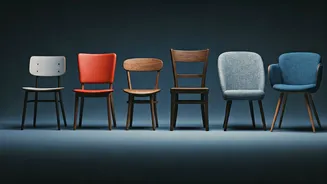







Open to Connection
Selecting the chair directly facing the therapist indicates a person who readily allows others into their emotional world. You possess a strong capacity
for trust and experience emotions deeply, unafraid to be vulnerable and initiate emotional openness. This could involve expressing your feelings openly, seeking assistance when needed, and being the first to extend your heart. However, this eagerness can sometimes lead to forming connections too quickly, potentially resulting in emotional pain. A key insight here is to practice pacing yourself, understanding that not everyone is equipped to handle the intensity of your emotions at the same speed.
Balanced Engagement
Choosing the middle chair signifies a balanced approach to relationships. You strike a harmonious chord between engaging with others and preserving your sense of self. This position suggests an understanding of when to share your inner world and when to maintain a degree of personal space. You are adept at sensing both your own feelings and those of others around you. This represents a healthy relational stance, with your strength lying in your keen self-awareness and emotional intelligence. It's a position worth cherishing and continuing to nurture.
Guarded Intimacy
Opting for a chair slightly off to the side reveals a person for whom direct attention can feel overwhelming. The idea of being fully observed might seem too intense, leading you to maintain proximity without complete immersion. You offer your support and affection, but within defined boundaries. This creates a subtle undercurrent of tension, a blend of desiring closeness while simultaneously needing to feel secure. A valuable lesson here is to learn to remain present in interactions, understanding that being seen does not inherently equate to danger.
Seeking Safety
If you gravitate towards a chair situated far away, perhaps near a wall, it suggests a profound need for emotional distance to feel secure. Closeness is perceived as a potential risk, likely stemming from past experiences where individuals you were intimate with caused you pain. Consequently, you tend to maintain a buffer zone, even when you yearn for love. This might manifest as choosing partners who are emotionally unavailable or initiating the end of relationships. The path forward involves learning to gradually allow others to approach you, fostering a sense of safety in deeper connections.
Self-Reliance
The choice of a corner chair or a beanbag points to a personality that equates control with safety. You tend to observe your surroundings keenly and rely primarily on your own capabilities. True relaxation might feel like an admission of vulnerability, a state that has previously come at a significant cost. While you possess immense strength, this constant vigilance can be exhausting. The core realization is that maintaining absolute control is not a prerequisite for feeling secure; there's an opportunity to relinquish some of that burden.
Ambivalent Connection
Selecting the chair by the window indicates a person caught between the desire to engage and the impulse to withdraw. One part of you longs for closeness and deep connection, while another is perpetually poised for departure. You may move towards intimacy, only to pull away. You experience emotions profoundly but hesitate to fully commit to staying. This internal conflict manifests as a push-and-pull dynamic: a simultaneous plea for holding and a command to keep distance. The growth lies in learning to remain present, even if only for brief moments, to experience sustained connection.