
Emperor Penguins
The Emperor Penguin, a majestic symbol of Antarctica, stands as the largest penguin species, known for its impressive stature and remarkable adaptations
to the harsh Antarctic climate. These penguins endure the coldest conditions, surviving temperatures as low as -40°C and winds of up to 144 km/h. They possess a thick layer of blubber, densely packed feathers, and a unique huddling behavior to conserve heat. Emperor Penguins breed during the Antarctic winter, with the males incubating the eggs while the females forage at sea. These penguins can dive to depths of over 500 meters, holding their breath for over 20 minutes to find food such as fish, krill, and squid. Their survival is a testament to nature's ability to adapt and thrive in even the most extreme environments, making them a captivating sight for any Antarctic traveler.
Crabeater Seals
Despite their name, Crabeater Seals primarily consume krill, tiny shrimp-like crustaceans that form the base of the Antarctic food web. They are among the most abundant seals in the world, with an estimated population of over 40 million. These seals are well-adapted to their icy habitat, with streamlined bodies and powerful flippers enabling efficient swimming. Their teeth have intricate cusps that act as a sieve, filtering krill from the water. Crabeater Seals are often found on pack ice, where they rest, breed, and give birth to their pups. While they are relatively harmless to humans, they face threats from leopard seals and orcas. Spotting these sleek seals gracefully gliding through the icy waters is a highlight for many Antarctic visitors, offering a glimpse into the rich biodiversity of the region.
Leopard Seals
Leopard Seals are formidable predators in the Antarctic ecosystem, known for their powerful build and predatory prowess. They are easily recognizable by their long, serpentine bodies and spotted coats. These seals are opportunistic hunters, feeding on a diverse diet that includes penguins, other seals, fish, and krill. Leopard Seals are ambush predators, often lying in wait near the water's edge or under ice floes to surprise their prey. They possess large, sharp teeth designed for tearing flesh and a powerful bite. While they pose a potential threat to humans, attacks are rare. Observing these apex predators in their natural habitat is a thrilling experience for travelers, providing a glimpse into the raw power and complexity of the Antarctic food chain. Their presence adds a layer of excitement and adventure to any Antarctic journey.
Weddell Seals
Weddell Seals are known for their gentle disposition and their ability to navigate and thrive in the challenging Antarctic environment. They are one of the most southerly distributed mammals, often found in close proximity to research stations and human settlements. These seals possess unique teeth adapted for rasping at ice to maintain breathing holes in the frozen sea. They are skilled divers, capable of remaining underwater for up to 80 minutes, and reaching depths exceeding 600 meters. Weddell Seals primarily feed on fish and squid. They are frequently found resting on ice floes or near the coast, and their calm demeanor makes them relatively approachable for researchers and visitors. Their presence enriches the Antarctic landscape, offering opportunities for observation and appreciation of these resilient animals.
Antarctic Fur Seals
Antarctic Fur Seals, smaller than other seals, possess a thick layer of fur that provides insulation in the frigid Antarctic climate. They are distinguished by their pointed snouts and prominent ear flaps. They experienced a dramatic decline due to hunting in the 18th and 19th centuries, but populations have since recovered. These seals feed on krill, fish, and squid, and they are adept swimmers and divers. They form colonies on rocky shores and islands during the breeding season. The males establish territories and defend them vigorously, while females give birth to a single pup. Antarctic Fur Seals are a common sight in coastal regions of Antarctica, adding to the vibrancy of the marine ecosystems. Seeing these playful and agile seals can be a delightful experience for anyone exploring the Antarctic coastline.
Killer Whales (Orcas)
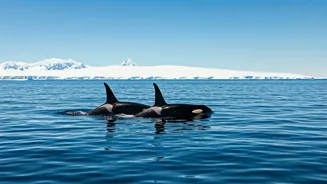
Killer Whales, or Orcas, are apex predators that play a crucial role in the Antarctic marine ecosystem. These intelligent and social animals are easily recognized by their distinctive black and white markings. They are highly adaptable hunters, with different populations specializing in different prey, including seals, penguins, fish, and even other whales. Orcas possess sophisticated hunting techniques, often working cooperatively to catch their prey. They are highly vocal, communicating through a variety of clicks, whistles, and pulsed calls. The presence of orcas adds a thrilling element to Antarctic waters, and witnessing their hunts is an unforgettable experience. They are a testament to the power and intelligence that thrives in the Antarctic environment.
Antarctic Petrels
Antarctic Petrels are graceful seabirds specially adapted to the Antarctic environment. These birds are known for their dark plumage and streamlined bodies, making them excellent flyers. They nest in colonies on rocky cliffs and islands, laying a single egg per breeding season. Antarctic Petrels feed on krill, fish, and squid, often foraging in the open ocean or near the ice edge. Their ability to navigate the harsh weather conditions and find food in this extreme environment showcases their adaptability. They are a common sight during Antarctic expeditions, their elegant flight adding a touch of beauty to the vast, icy landscapes. Observing their resilience in this challenging environment underscores the incredible adaptations of Antarctic wildlife.