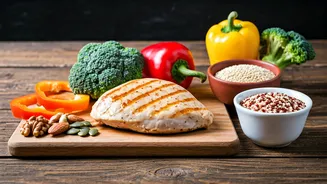







Protein Power Explained
Protein is an essential nutrient, forming the building blocks for muscles, tissues, and enzymes in your body. It plays a crucial role in repairing cells
and keeping you feeling full for longer, making it a valuable addition to your diet. Incorporating protein into your meals can support weight management by reducing cravings and improving metabolism. It also contributes to strong bones, boosts the immune system, and aids in maintaining optimal bodily functions. Whether you're an athlete, a busy professional, or simply looking to enhance your health, understanding the importance of protein is a great first step towards healthier eating habits. The right amount of protein helps you build and maintain muscle mass, keeping your body strong and efficient.
Breakfast Power-Ups
Kickstart your day with high-protein breakfast options that provide sustained energy. Freezer Bagel Breakfast Sandwiches are a convenient way to prepare a protein-packed meal ahead of time. You can assemble bagels with scrambled eggs, lean meats, and cheese and freeze them for easy access on busy mornings. Another choice is Coconut-Green Apple Muesli, which combines the goodness of protein-rich ingredients like nuts, seeds, and Greek yogurt for a satisfying and nutritious start. Adding protein to your breakfast is a great strategy to prevent mid-morning hunger pangs and stay focused throughout the morning. By consuming protein in the morning, your body will have a consistent supply of nutrients that will boost energy levels and keep you from reaching for unhealthy snacks later in the day.
Lunchtime Protein Boosts
For a protein-rich lunch, consider options that are both convenient and nutritious. Avocado and Egg Breakfast Tacos offer a creative way to combine protein and healthy fats. These are easy to assemble with scrambled eggs, avocado, and your favorite taco toppings. Another option is Red Lentil-Beet Hummus, a delicious and protein-filled dip. Serve it with whole-wheat pita bread or fresh vegetables for a well-rounded meal. Ensuring you have enough protein at lunch helps maintain energy levels and avoids the afternoon slump, aiding in better performance and focus. By integrating protein into your lunchtime routine, you can keep your body going until dinner time without any distractions.
Dinner Protein Delights
When it comes to dinner, explore dishes that satisfy your taste buds and protein needs. Roasted Salmon With Mandarin Salsa is a flavorful and simple dish. Salmon is naturally high in protein and omega-3 fatty acids, making it a great choice. You can also prepare a quick and satisfying meal with Pantry to Plate: High-Protein Meals from Cans and Jars. Incorporating canned beans, lentils, and canned tuna can create quick and protein-rich dinners. This is especially useful on busy weeknights when you want a meal that is both healthy and easy to prepare. A protein-rich dinner also supports muscle repair and recovery after a long day, preparing your body for a restful night.
Snacking for Success
Snacking can be a great way to maintain a steady protein intake throughout the day. High-Protein Snacks for GLP-1 Users, for example, is a valuable resource. GLP-1 medications can influence appetite, so incorporating snacks that are high in protein can help manage hunger effectively. Consider options like hard-boiled eggs, Greek yogurt with berries, or a handful of nuts. These snacks provide a quick and convenient protein boost. By planning your snacks ahead of time, you can prevent unhealthy cravings and keep your body fueled and satisfied between meals. High-protein snacks are also an excellent tool to avoid overeating during your next meal.
Beans & Lentils Basics
Beans & Lentils for Beginners: A Starter Guide to Using Legumes for Affordable Protein and Fiber, demonstrates that beans and lentils are fantastic sources of plant-based protein, fiber, and various essential nutrients. They are also cost-effective and versatile ingredients. Start by incorporating them into your diet slowly, perhaps by adding them to soups, salads, or stews. Experiment with different types of beans and lentils, such as black beans, chickpeas, or red lentils, to find your favorites. You can prepare them in a variety of ways, whether you choose to cook them from scratch or use canned varieties. Including legumes regularly can significantly increase your protein and fiber intake. This ultimately contributes to a well-rounded and balanced diet.
Protein Myth-Busting
There are numerous myths surrounding protein consumption, such as the idea that excessive intake is bad for kidneys. It's essential to separate fact from fiction. Understand that a moderate intake of protein is generally safe for individuals with healthy kidneys. However, those with pre-existing kidney issues may need to monitor their protein intake under medical supervision. The idea that protein will automatically lead to muscle gain without exercise is also a misconception. Exercise is crucial for muscle development. Learn to debunk common myths and misconceptions by consulting reliable sources for accurate information about protein. Focus on balance and listen to your body's cues and needs to ensure that your diet aligns with your overall health goals.