








Atomic Clock Precision
Atomic clocks are marvels of precision engineering, vital for modern navigation and communication. They achieve their remarkable accuracy by integrating
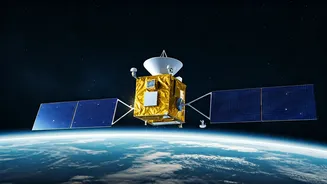
a quartz crystal oscillator with a collection of atoms. This sophisticated synergy allows the clock to maintain an incredibly stable frequency. The core principle involves using the atomic energy levels to fine-tune the quartz oscillator. When the derived frequency is correct, it induces a significant number of electrons within the atoms to shift energy states. Conversely, an incorrect frequency results in fewer electron transitions. This difference serves as a precise indicator, enabling a correction to be applied to the quartz oscillator, steering it back to its exact intended frequency. These clocks are critical components on navigation satellites like those in the GPS system, ensuring accurate positioning. While NASA's Deep Space Atomic Clock is even more stable, achieving its superior performance through the use of mercury ions, the fundamental principle of atomic resonance remains key. Understanding these principles is crucial for UPSC aspirants, as the relevance extends to understanding how navigation systems function and the underlying scientific accuracy they depend on.
VLEO Satellite Advantages
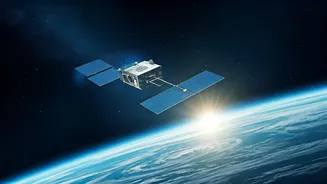
The Very Low Earth Orbit (VLEO), typically situated between 100 and 450 kilometers above Earth, is increasingly becoming a focal point for both commercial and scientific space ventures. A significant advantage of operating in this near-Earth domain is its relative safety from space debris collisions. Satellites in VLEO experience accelerated orbital decay due to residual atmospheric drag, meaning they naturally re-enter the Earth's atmosphere more quickly, reducing the long-term risk of collision. Furthermore, satellites positioned in VLEO offer enhanced imaging capabilities and significantly lower latency, making them highly suitable for next-generation communication technologies like 6G. However, this proximity to Earth also presents distinct challenges. The residual atmosphere can shorten satellite lifespans, necessitating active orbit maintenance. Additionally, satellites face increased surface erosion from atomic oxygen, and communication windows can be limited due to the rapid orbital motion. Comprehending VLEO is important for UPSC candidates as it reflects the evolving landscape of satellite technology and its applications, particularly in the context of burgeoning private space activities.
India's Deep Ocean Mission
India's ambitious Deep Ocean Mission, initiated in 2021, is a cornerstone of its strategy to sustainably explore and utilize the vast resources of the deep ocean, thereby strengthening its Blue Economy. This comprehensive mission aims to develop cutting-edge technologies necessary for delving into the ocean's depths to harness both living and non-living resources. A key component of this initiative is the Samudrayaan Project, which is actively developing India's first manned submersible vehicle, 'MATSYA 6000'. This submersible is designed to take humans to the ocean floor for exploration and research. The mission's launch year, 2021, aligns with the United Nations' designation of the 2021-2030 decade as the ‘Decade of Ocean Science for Sustainable Development’. India's extensive coastline of 7,517 km, along with its nine coastal states and 1,382 islands, positions it advantageously to lead in oceanographic exploration and sustainable development initiatives. Understanding this mission is vital for UPSC aspirants, as it intersects with critical themes such as resource management, marine technology, and sustainable development goals.
OSIRIS-REx Asteroid Mission
The OSIRIS-REx mission was a groundbreaking endeavor by NASA, marking the first time a U.S. mission successfully collected a sample from an asteroid and returned it to Earth. This historic mission concluded its primary objective on September 24, 2023, when it safely delivered a capsule containing material gathered from asteroid Bennu. Following this successful sample return, the spacecraft was rebranded as OSIRIS-APEX and embarked on a new journey. Its subsequent mission is to investigate asteroid Apophis, a target of significant scientific interest, with observations planned for 2029. It's important to note that OSIRIS-REx was not a collaborative effort with the European Space Agency, nor was its primary target the Trojan Asteroids. The mission's focus was specifically on asteroid Bennu, with the subsequent phase targeting Apophis. For UPSC aspirants, understanding such space missions is crucial as they represent advancements in planetary science, asteroid exploration, and the broader context of international space competition, frequently appearing in the Science & Technology section of the exam.
Understanding HbA1c Test
The HbA1c test is a crucial diagnostic tool for managing diabetes, offering a window into average blood sugar levels over an extended period. It is a straightforward blood test that reveals a person's average blood glucose concentration spanning the preceding two to three months. A normal HbA1c reading is considered to be below 5.7 percent. Readings between 5.7 percent and 6.4 percent typically indicate prediabetes, while an HbA1c of 6.5 percent or higher, confirmed by repeated testing, signifies a diagnosis of diabetes. The target for individuals with diabetes is generally to maintain an HbA1c level below 7 percent, though this can be adjusted based on individual factors like age. Consistently elevated HbA1c levels are associated with an increased risk of long-term health complications affecting vital organs such as the eyes, kidneys, nerves, and heart. The test is particularly valuable for assessing long-term glucose control in individuals already diagnosed with diabetes, providing insights into the effectiveness of treatment plans and lifestyle management, even if single-day fasting glucose tests appear normal. For UPSC aspirants, knowledge of HbA1c is relevant due to the significant burden of diabetes in India and its connection to public health initiatives.