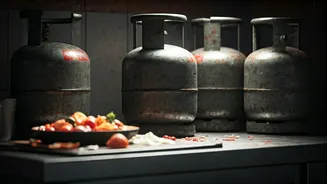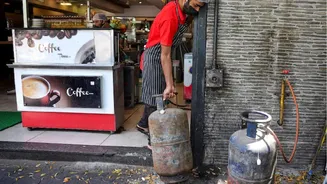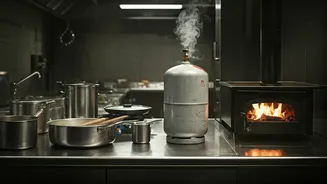








Discover how restaurants in Ranchi are grappling with a severe LPG shortage, forcing them to reduce their offerings and explore alternative cooking methods. This article delves into the challenges faced by businesses and their innovative solutions to keep operations afloat.
Ranchi's food establishments are in a tight spot, facing dwindling LPG supplies. Learn how chefs and owners are adapting by trimming menus and turning to coal or induction stoves to keep the kitchens cooking.
Widespread Supply Issues
Numerous eateries across Ranchi, from upscale dining spots to humble food stalls, are experiencing significant disruptions due to a restricted supply of
Liquefied Petroleum Gas (LPG). Despite official assurances that there is no widespread crisis, many restaurant proprietors have reported that their existing LPG reserves are only sufficient for a couple more days. This scarcity is compelling businesses to take immediate action to sustain their operations. The situation demands swift adaptation, as the lack of a consistent fuel source directly impacts the ability to serve customers and maintain daily business activities. The reliance on LPG, a common and convenient fuel for commercial kitchens, has been severely challenged, pushing owners to re-evaluate their fundamental operational needs and procurement strategies in a rapidly evolving scenario.
Menu Reduction Strategies
With dwindling LPG supplies, several establishments have been compelled to significantly curtail their menu offerings. This strategic reduction aims to optimize the use of the remaining gas cylinders, ensuring that essential dishes can still be prepared for existing guests and staff. For instance, one city hotel owner has switched to using an induction cooker and procuring necessary utensils to manage cooking for his hotel's residents and employees. This shift has also led to a complete halt in accepting new bookings for parties and events, as the unpredictable gas availability makes catering to larger gatherings impossible. Such measures, while necessary for immediate survival, highlight the profound impact of the fuel shortage on business expansion and service diversification.
Exploring Alternative Fuels
In response to the critical LPG shortage, many restaurateurs are actively exploring and implementing alternative fuel sources. One owner of high-end restaurants in the city is considering a transition to coal as his LPG stock is nearing depletion, anticipating he can operate for another two days with his current supply. This proactive approach demonstrates a commitment to business continuity despite the challenging circumstances. Smaller eatery owners are particularly vulnerable, with some contemplating temporary shutdowns if the commercial cylinder supply does not normalize soon. The increased price of a 19-kg commercial LPG cylinder, now at Rs 2,039.50 after a Rs 114 rise, coupled with unofficial prices ranging from Rs 2,700 to Rs 2,800, makes it unaffordable for many. Consequently, some owners have decided to temporarily close their establishments, opting to pay their staff salaries while awaiting the return of normal gas supply, rather than increasing food prices and losing customers.
Impact on Sweet Shops
Beyond traditional restaurants and eateries, the LPG shortage is also affecting other food businesses, including sweet shops. One prominent sweet shop owner has significantly reduced the production of various sweetmeat items due to the limited availability of cooking gas. While the production of savouries remains unaffected, the overall output has been curtailed to manage resources effectively. This demonstrates the pervasive nature of the fuel crisis, impacting diverse sectors of the food industry and forcing businesses to make difficult choices regarding their product lines and operational capacity. The adjustment in production indicates a strategic response to conserve fuel and maintain some level of business operation amidst uncertainty.