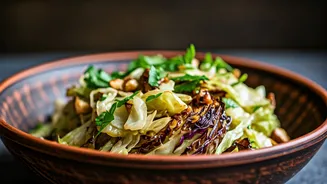

Cabbage Salad Introduction
The Baked Cabbage Salad is a culinary delight that transforms the humble cabbage into something extraordinary. This recipe offers a unique approach to salad
preparation, emphasizing roasting to enhance flavor. The simplicity of the ingredients belies the depth of flavor achieved, making it a perfect dish for both everyday meals and special occasions. The salad's appeal lies in its textural contrasts: the tender, slightly caramelized cabbage meeting the crispness of other additions. Beyond its taste, the Baked Cabbage Salad is also a nutritional powerhouse, packed with vitamins and fiber. This introduction explores the dish's appeal and the benefits it offers, setting the stage for a delightful culinary exploration. It represents a way to transform a simple vegetable into a memorable meal, suitable for various culinary levels. It's an invitation to experience the rich flavors and satisfying textures this salad provides.
Preparing the Cabbage
Preparing the cabbage is the crucial first step towards crafting a successful Baked Cabbage Salad. Begin by selecting a fresh, firm head of cabbage, preferably a variety like green or savoy for their heartiness and flavor. Thoroughly wash the cabbage, ensuring all outer leaves are clean and free of any debris. Next, shred the cabbage using a knife or a food processor, aiming for uniform pieces that will cook evenly. The goal is to obtain roughly chopped or shredded cabbage, which is the foundation of the salad. For the best result, the cabbage should be shredded to a size that allows for easy cooking and enhances the flavor absorption. Proper preparation not only improves the dish's appearance but also ensures an even distribution of flavors throughout. Correct preparation is essential for a delicious final product, emphasizing the importance of attention to detail right from the beginning.
Roasting Technique Explained
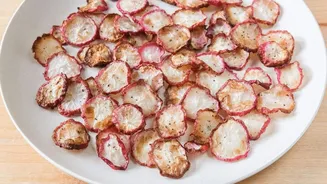
Roasting is the heart of creating a flavorful Baked Cabbage Salad. After preparing the cabbage, the key lies in the roasting technique. Start by preheating your oven to the recommended temperature, usually around 400 degrees Fahrenheit or 200 degrees Celsius, ensuring even heat distribution for optimal cooking. Lightly toss the shredded cabbage with a drizzle of olive oil, salt, and pepper in a large bowl. Next, spread the cabbage evenly on a baking sheet, making sure it doesn't overcrowd the space, as this can lead to uneven cooking. The roasting time varies depending on the oven and desired texture, generally ranging from 20 to 30 minutes. Look for the cabbage to turn tender, with the edges starting to caramelize, which enhances the sweet flavor. Regular stirring during the roasting process is key to ensure even cooking and prevent burning. Proper roasting enhances the natural flavors of the cabbage, resulting in a dish that is both delicious and visually appealing.
Adding Flavorful Elements
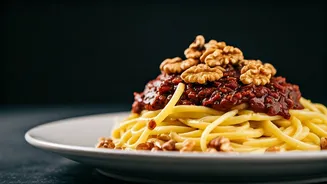
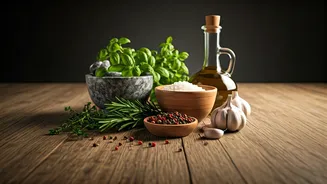
Once the cabbage has been roasted to perfection, it is time to enhance the flavors. A diverse range of additions can elevate the taste and texture of the Baked Cabbage Salad. Some popular choices include toasted nuts, like walnuts or almonds, for a satisfying crunch, which also offers nutritional value. Dried cranberries or raisins can be introduced for a touch of sweetness. A flavorful vinaigrette or dressing is essential to bring all the elements together. Combine olive oil, vinegar (such as balsamic or apple cider), Dijon mustard, and any desired herbs and spices in a small bowl. The key is balance, so the dressing complements the other ingredients without overwhelming them. Consider incorporating crumbled feta cheese or goat cheese for a tangy element. Carefully layering the components ensures each bite delivers a blend of flavors and textures, ensuring every mouthful is a delight. Experimenting with different ingredients is encouraged to create a personalized salad that suits individual tastes.
Plating and Serving
The final touch of presentation and serving is key for completing your Baked Cabbage Salad. Once the roasted cabbage and added ingredients are mixed, it's time to assemble the salad. For an eye-catching presentation, spread the salad on a serving platter or arrange individual portions in bowls. Consider garnishing the salad to add visual appeal, using fresh herbs such as parsley or chives. A drizzle of the dressing can add extra flavor and enhance the presentation. To serve, the salad can be enjoyed warm, straight from the oven, or served at room temperature. The flexibility in serving styles makes the Baked Cabbage Salad a versatile dish, suitable for various events. The balance of textures and flavors makes it enjoyable for all. Enjoying it with a crusty bread or alongside grilled chicken or fish makes the meal even more complete and satisfying. The goal is to provide a dish that's both appealing and delicious, offering a complete culinary experience.