







A Return to Purpose
As the modern world often rushes past, a growing number of travelers are seeking more profound and unhurried experiences. This desire is breathing new
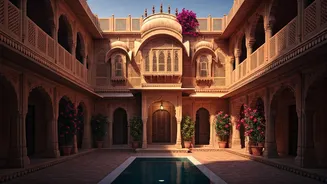
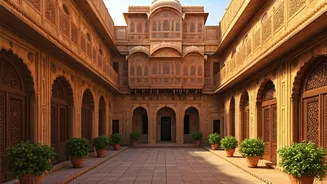
life into India's venerable havelis, structures that were once the vibrant heart of aristocratic families and bustling trade. Haveli Dharampura, nestled within the labyrinthine lanes of Old Delhi, exemplifies this revival. Stepping through its ornate gateway reveals a sanctuary where the city's energetic symphony of sounds softens into a gentle hum, becoming a backdrop rather than a cacophony. These havelis are not merely preserved artifacts; they represent a unique middle ground between a museum and a hotel, offering guests the opportunity to inhabit history itself. Originally built during the Mughal era, often dating back to the 17th century, these multi-generational homes were designed as self-contained worlds. They ingeniously integrated spaces for family life, business dealings, religious practices, and social gatherings, all revolving around a central courtyard. For centuries, they functioned as microcosms of community life, but with the march of modernization, many began to fall into disrepair, facing demolition or conversion into utilitarian spaces. The current restoration efforts aim to reclaim their original purpose, making them not just beautiful remnants of the past but living spaces that tell stories.
Echoes of Bengal's Past
Parallel to the transformation seen in Delhi, the riverside mansion of Bari Kothi in Bengal narrates a similar tale of rediscovery and renewed purpose. Constructed in the late 18th century by the forefathers of its current custodians, Bari Kothi was the seat of the Sheherwali Jain community, a prosperous merchant group that wielded significant influence in regional trade, connecting the subcontinent with European markets. This grand structure was far more than a mere residence; it served as both a home and a central hub for family enterprises, earning its name, 'The Big House.' For six generations, it was the vibrant core of their family's existence, a place where life, commerce, and culture intertwined. However, like many heritage properties in Bengal, it eventually fell silent, its grandeur preserved but dormant. The decision by a brother-sister duo to revive Bari Kothi was driven by a deep sense of familial legacy and a commitment to economic revitalization. Their mission extended beyond simply saving a building; it was about breathing life back into the local economy. This undertaking involved meticulously ensuring that every modern comfort and necessity was integrated seamlessly and invisibly, preserving the architectural integrity and the aesthetic experience of the building as it stood in 1780, while ensuring its functionality for the 21st century.
Jaipur's Personal Touch
In Jaipur's iconic Pink City, the heritage haveli Padmaa offers a more intimate perspective on the intricate negotiation between historical preservation and contemporary guest expectations. This family estate, boasting a history of three centuries, presented its owners with a unique set of challenges, particularly concerning the integration of modern amenities. The decision to add private bathrooms, for instance, was a lengthy debate, fraught with the concern that altering load-bearing walls might compromise the original character and transform intimate rooms into generic hotel suites. The ultimate compromise prioritized restraint and subtlety, aiming to enhance comfort and privacy without creating a jarring contrast between the old and the new. Consequently, modern infrastructure like air conditioning units, plumbing, and electrical systems are discreetly concealed within existing structures or service walls. Switches are hidden, and lighting fixtures are recessed, ensuring that the guest experience is elevated by unseen conveniences. This thoughtful approach at Padmaa highlights the delicate balance required in heritage hospitality, where guest comfort is paramount but must never overshadow the inherent spirit and history of the haveli itself, creating a stay that feels both luxurious and authentically rooted in the past.
Authenticity Over Aesthetics
While platforms like Instagram often showcase haveli stays adorned with sun-drenched courtyards and picturesque settings, the reality of operating these heritage properties is significantly more nuanced. The charm of a haveli often lies in its unvarnished authenticity, a quality that guests may not always anticipate, as noted by the team at Haveli Dharampura. Visitors might book based on idealized photographic representations, essentially purchasing an aesthetic. However, the actual experience involves embracing the authentic soundscape of the surrounding neighborhood, the distinct proportions of rooms designed according to historical domestic architecture rather than modern hotel standards, and compact bathrooms or narrow corridors. These are not compromises but inherent characteristics that contribute to the unique charm of a heritage stay. Furthermore, the vibrant, sometimes chaotic, yet always alive, urban environment outside the haveli's walls is an integral part of the experience. Instead of sanitizing these elements, heritage hospitality increasingly reframes them as valuable components that enrich the guest's immersion in local life and culture, offering a deeper connection than a conventional hotel might provide.
Living Legacies, Local Roots
The current appeal of havelis lies not just in their architectural beauty but in their capacity to convey deeper narratives of community and enduring heritage. Padmaa, for instance, has been an integral part of the Shah family's legacy for nearly three centuries, initially serving as a jewelry business hub before evolving into a family home for seven generations. Its transition into a boutique hospitality venue was a natural progression, a means to ensure its financial and emotional continuity while sharing its rich history with a wider audience. At Haveli Dharampura, the staff are drawn from the very lanes that guests explore, fostering an environment where experiences are not artificially curated but genuinely lived, reflecting the authentic heritage that draws visitors. Similarly, at Bari Kothi, the essence of the property resides in its people, not merely the walls. The owners emphasized the importance of retaining the soul of the establishment by employing local individuals, thereby avoiding outsourcing the human element. This project has not only trained over a hundred local artisans but also provides livelihoods for approximately 150 families. This emphasis on community integration and the genuine human connection is what fundamentally distinguishes these havelis from standard hotels. They are not conceived from blueprints but are inherited legacies, thoughtfully adapted to resonate with contemporary travelers.