





Anomaly Unfolds
In the early hours of March 29, 2026, a Starlink satellite, designated 34343, encountered a significant issue while orbiting approximately 560 kilometers
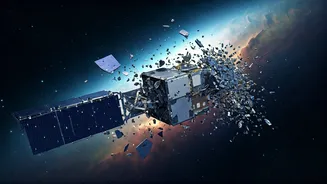
above Earth. This resulted in a complete loss of communication with the satellite, a critical development that prompted immediate attention from SpaceX. The company publicly acknowledged the event, referring to it as a 'fragmentation event,' indicating that the spacecraft had broken apart in space. This occurrence raised questions about the safety and stability of satellite operations, especially concerning the potential for debris creation. The focus quickly shifted to assessing any risks to the International Space Station (ISS), its crew, and ongoing space missions, including the pivotal Artemis II lunar program. Thankfully, initial analyses confirmed that the event posed no new threats to these vital assets, a relief given the busy orbital environment.
Operational Impact
Beyond the immediate concerns for human spaceflight, the fragmentation of Starlink 34343 also underwent scrutiny for its potential impact on other space endeavors. Specifically, the timing of the anomaly was assessed against the simultaneous Transporter-16 mission, a SpaceX endeavor designed to deploy numerous payloads into orbit. It was determined that this launch posed no additional risk, as its payload deployment trajectory was carefully managed to remain well above or below the altitudes occupied by the Starlink constellation. This careful planning underscored the layered safety protocols in place for space operations. In the aftermath, SpaceX's dedicated teams initiated a comprehensive investigation to pinpoint the exact root cause of the on-orbit anomaly. The commitment was clear: to implement any necessary corrective actions swiftly and efficiently, ensuring the continued reliability and safety of future Starlink satellite deployments and operations. This proactive approach is fundamental to maintaining confidence in large-scale satellite networks.
Visualizing the Event
Adding a unique perspective to this orbital incident, an image captured by HEO Robotics on February 14, 2026, showcased Starlink satellite 34343 in its operational state weeks before the fragmentation. This photograph, part of a broader effort to document and analyze spacecraft in orbit, provided valuable context. The image offered a clear view of the satellite's design and its position in space, serving as a baseline for future observations. HEO Robotics, an entity focused on space situational awareness, was actively working to capture updated imagery of the satellite following its fragmentation event. The goal of such post-event imaging is to visually assess the extent of the debris field and to gather data that can aid in understanding the mechanics of the breakup. This visual evidence is crucial for refining orbital models and improving our ability to track and manage space debris, a growing concern for all spacefaring nations and organizations.