






Game Night in Italy
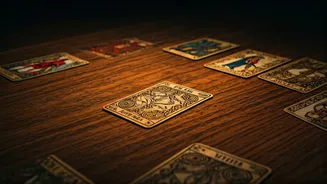
Contrary to popular belief, the journey of tarot cards did not begin with fortune-telling or ancient secrets. Instead, their story kicks off in 15th-century
Italy, where they were known as 'tarocchi'. These weren't consulted for mystical insights; they were the centerpiece of a sophisticated card game enjoyed by the wealthy elite. This trick-taking game, somewhat akin to modern Bridge, provided an aristocratic form of entertainment. The very creation of these decks was geared towards leisure and social interaction within the upper echelons of Renaissance society, highlighting a purely recreational purpose at their inception and laying the groundwork for their future evolution.
Luxury Artistry of Early Decks
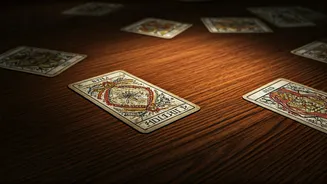
The very first tarot decks were far from the mass-produced items we might imagine today. They were often exquisite, hand-painted creations, commissioned by influential families as lavish works of art. These were not cheap commodities; their creation involved significant craftsmanship and expense, making them accessible only to the affluent. Owning and playing with these ornate decks was a statement of wealth and status, reflecting the artistic and cultural values of the Renaissance aristocracy. The visual richness of these early decks underscored their role as luxury items, setting them apart from ordinary playing cards and hinting at the potential for deeper meaning beyond their initial game function.
Mysticism's Late Arrival
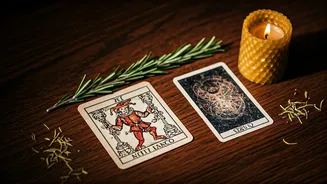
The profound connection between tarot and mysticism, which defines its popular image today, is a relatively recent development in its long history. It wasn't until the 18th century, long after the cards' creation, that occultists and writers, particularly in France, began to explore and articulate a link between tarot imagery and ancient wisdom or hidden knowledge. This period marked a significant turning point, transforming the cards from a recreational game into a tool for esoteric exploration. This infusion of mysticism was an overlay, a reinterpretation that occurred centuries after the cards first appeared, shaping their destiny into a spiritual and symbolic system.
Debunking Egyptian Origins
A persistent myth that has contributed to tarot's mystique is the notion that it originated in ancient Egypt. However, historical evidence does not support this claim. This erroneous belief gained traction among some early theorists who sought to imbue tarot with an ancient and profound lineage. By associating the cards with the mystique of Egyptian civilization, they enhanced their appeal as tools of hidden knowledge and spiritual insight. This fabricated history, while boosting the cards' mystical reputation, was a later invention designed to lend gravitas and antiquity to a system that had a much more recent, and secular, beginning in Renaissance Europe.
A Constant Reinvention
The enduring appeal of tarot lies in its remarkable ability to adapt and evolve with the changing tides of culture and human understanding. From its origins as a popular game for the aristocracy, it transitioned through periods of occult fascination. In more recent times, tarot has found a new role as a valuable instrument for self-reflection, personal growth, and psychological insight. This continuous reinvention allows tarot to remain relevant, offering different meanings and applications to successive generations, proving it's a dynamic system that continues to resonate with contemporary needs for guidance and self-discovery.