








The Spark
A recent social media post by a food delivery platform ignited a passionate discussion about the merits of Bengaluru versus Chennai sambar. This friendly
rivalry, spurred by an IPL match, highlighted the deep regional affection for this staple dish. The ensuing online debate prompted a closer look at the actual culinary differences that set these two beloved versions apart, inviting experts to weigh in on what makes each sambar uniquely its own.
Bengaluru's Sweet Embrace
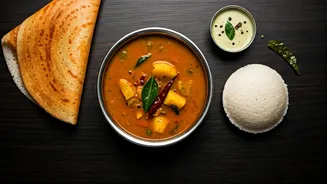
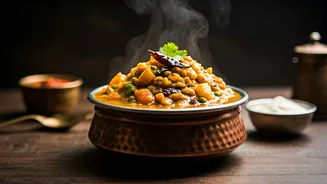
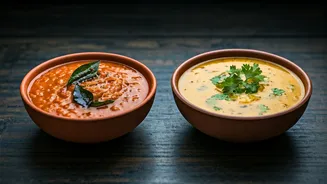
In Bengaluru and across Karnataka, sambar often presents a lusciously thick consistency, subtly enhanced by a touch of sweetness, frequently derived from jaggery. The spice blend is typically more robust, meticulously crafted to harmonize with accompanying dishes like idli, vada, and dosa. This thoughtful flavour construction aims to complement the textures of these breakfast staples, creating a comforting and well-rounded taste experience that lingers pleasantly. The inclusion of a variety of vegetables further enriches its depth, and freshly ground masalas contribute layers of aroma, giving this style a nearly velvety body.
Chennai's Tangy Zing
Contrastingly, sambar in Chennai and much of Tamil Nadu tends to be more fluid, boasting a more pronounced tanginess from tamarind and a sharper, more assertive spice profile. This flavour balance is intentionally calibrated to accompany rice as part of a larger meal. The emphasis is on a cleaner, sharper, and more defined taste, achieved through the careful application of sambar powder and precise timing of tamarind's addition. While often featuring a single primary vegetable like drumstick, brinjal, or pumpkin, its strength lies in its directness and the invigorating zest it imparts.
Historical Roots & Expert Views
The distinct characteristics of both sambar styles can be traced back to historical influences and evolving regional palates. Food historians suggest that sambar's origin story is linked to a royal encounter, leading to its development as a versatile lentil stew. Experts like chef Mohammed Eliyaz view these as two unique expressions of the same dish. Bengaluru sambar is described as rounded and comforting, built with freshly ground masala for layered aroma, while Chennai sambar is characterized by restraint and precision, offering a sharper, more direct flavour profile driven by tamarind and spice. This divergence reflects not just ingredients but also the cultural context and how the dish is integrated into daily meals.
Subtle Nuances of Taste
The differences in Bengaluru and Chennai sambar, though not always drastic at first glance, become more apparent with regular consumption. Food bloggers note variations in how the flavours present themselves – some feeling fuller and slightly sweet, others lighter with more tanginess. This difference extends to the palate's experience and aftertaste. While the core lentil stew remains the same, local culinary practices, the types of vegetables used, the roasting of spices, and the specific ratios of dal to liquid all contribute to these subtle yet significant regional variations. These adaptations ensure sambar perfectly complements the diverse eating habits across South India.