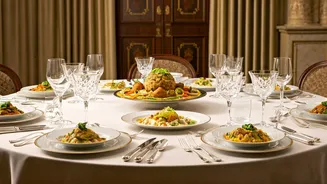

A Grand Welcome
The Rashtrapati Bhavan hosted a grand dinner for Vladimir Putin, showcasing the best of Indian cuisine. The event was a display of culinary diplomacy,
where each dish served had a purpose. The choices reflected the traditions and flavors of India. This meal was more than just a dinner; it was a carefully planned event designed to impress the guest. The dinner allowed the host to highlight the country's rich gastronomic heritage, from its diverse ingredients to its sophisticated cooking techniques. The selection of dishes likely aimed to offer a memorable experience, creating a lasting impression.
Flavorful Appetizers
The dinner commenced with a selection of appetizers, setting the stage for the culinary journey ahead. These introductory courses are usually light and flavorful, designed to stimulate the appetite. The appetizers were most likely an invitation to experience the variety of tastes the country has to offer. The appetizers might have included a blend of both vegetarian and non-vegetarian options. This would present a spectrum of tastes, textures, and aromas. These appetizers are also designed to be visually appealing, incorporating vibrant colors and creative presentations that add to the overall dining experience.
The Jhol Momo's Presence
One of the standout dishes on the menu was the Jhol Momo, a Tibetan-influenced dumpling in a flavorful broth. This dish is usually celebrated for its delicate balance of tastes and comforting warmth. Its presence on the menu highlights the fusion of culinary influences in India. This dish represents the diversity found in Indian cuisine. Serving Jhol Momo reflects the country's embracing of other cultures, and its ability to incorporate different flavors. The inclusion of such a dish likely added a unique element to the dinner's overall composition.
The Main Course Dishes
The main course undoubtedly presented a range of dishes, each intended to highlight different culinary regions and traditions. The main dishes provided the central experience of the meal. They were likely created using different cooking methods, offering a variety of flavors and ingredients. Each dish would have been meticulously prepared. It could range from classic favorites to innovative creations. The main course selection would have been planned to provide a satisfying and memorable culinary experience, displaying the broad spectrum of Indian cuisine. The main course would have showcased the diversity of ingredients and cooking styles found across the country.
Dal Tadka's Significance
A staple in many Indian meals, Dal Tadka played a significant role in this dinner. This simple yet flavorful dish showcases the essence of Indian cooking. Its presence emphasizes the importance of comfort food and authentic flavors. Dal Tadka is a staple in most Indian households. It provides a comforting and familiar taste. The inclusion of this dish speaks volumes about the hospitality and the desire to offer a truly representative Indian culinary experience. Dal Tadka also provides a sense of familiarity, offering a balance to the other dishes.
Beyond the Plate
The Rashtrapati Bhavan dinner was a meticulously planned experience, extending beyond the food. The event included aspects like the setting, the presentation, and the company. The aim was to create a warm and welcoming atmosphere. The selection of the dishes, the presentation, and the ambiance all played a part. The dinner acted as a symbolic gesture of friendship and respect. Every detail, from the choice of linen to the placement of cutlery, would have been carefully considered. The dinner served as a demonstration of Indian hospitality.
A Culinary Diplomacy
The dinner hosted at the Rashtrapati Bhavan was an act of culinary diplomacy. The food served served to convey respect and goodwill. The menu reflected India's heritage, inviting the guest to experience the country. This gastronomic gesture was a crucial aspect of the state visit. The careful choices made, the dishes selected, and the overall execution of the meal were all part of a larger strategy. The dinner had the potential to create a lasting impression and enhance the relationship between nations. The meal presented a chance to promote cultural understanding and appreciation.