





Orbital Outpost
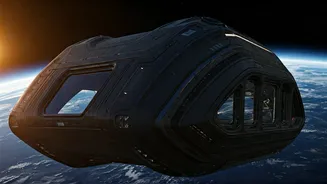
The International Space Station (ISS) stands as the pinnacle of human engineering achievement, with a staggering cost of $150 billion. Its assembly was
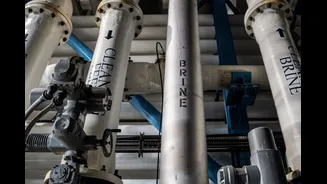
a decade-long global effort, involving 15 nations and thousands of specialists. More than just a research laboratory in orbit, the ISS has been a crucible for innovation, directly leading to advancements like memory foam, universally adopted water filtration systems for disaster relief, and the crucial CMOS image sensor technology found in virtually every digital camera today. Its immense cost has proven to be an incredibly generous investment, with its cameras serving as a testament to the groundbreaking research it has fostered.
Fusion's Promise
ITER (International Thermonuclear Experimental Reactor), situated in southern France, represents one of humanity's most ambitious scientific quests: achieving controlled nuclear fusion to generate more energy than it consumes. With an estimated cost ranging from $22 to $65 billion, it embodies the immense resources dedicated to solving our global energy crisis. Every challenge encountered in ITER's construction, from minor setbacks to significant delays, underscores the profound financial commitment required to pursue a future free from fossil fuels. The potential reward of limitless, clean energy makes this endeavor a critical pathway for sustainable civilization.
Cosmic Eye
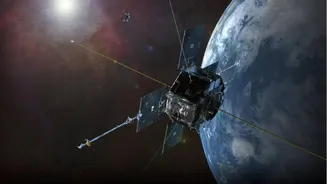
The Hubble Space Telescope, launched in 1990, overcame an initial flaw with its mirror to become the most scientifically fruitful observatory in history. It has made over 1.7 million observations, leading to more than 20,000 published research papers and fundamentally altering our perception of the cosmos. The $13–14 billion investment in Hubble has yielded images that have redefined our place in the universe. Furthermore, the technological pipelines developed for Hubble have significantly advanced digital image processing, forming the basis for crucial medical imaging technologies like MRI and CT scans utilized in hospitals worldwide.
Naval Powerhouse
The Gerald R. Ford-class aircraft carrier, with the USS Gerald R. Ford as its lead vessel, represents the most expensive warship ever constructed, costing approximately $13 billion. This state-of-the-art naval asset replaces traditional steam catapults with advanced electromagnetic launch systems, a significant leap in carrier aviation technology. Unlike many other mega-projects focused on discovery, the Ford-class is designed primarily for deterrence. The substantial expenditure on this vessel sparks debate about its value, but its cost undeniably signifies its formidable presence and capability in global defense.
Webb's Reach
Initially projected at a mere $1 billion, the James Webb Space Telescope (JWST) ballooned in cost to $9.7-10.8 billion over its 20-25 year development period, famously consuming a significant portion of NASA's budget. This powerful observatory, with its intricate gold-coated mirrors, has already peered back to detect galaxies formed just 300 million years after the Big Bang. The cutting-edge innovations required for JWST are already finding applications in fields such as medical thermal imaging and advanced materials science, demonstrating the far-reaching impact of this colossal astronomical undertaking.
Silent Deterrent
The Columbia-class ballistic missile submarine is the most expensive naval vessel per unit, with initial estimates for the lead ship, USS Columbia (SSBN-826), reaching $15.03 billion. The entire program, encompassing 12 submarines, is slated to exceed $100 billion, each vessel carrying unparalleled nuclear deterrent capabilities. These submarines are designed to be the ultimate silent guardians, ensuring global security through immense strategic power. The precision navigation systems developed for this class have also contributed to the sophisticated GPS technology embedded in the map applications we use daily.
Particle Smashing
The Large Hadron Collider (LHC), a colossal 27-kilometer underground ring straddling the French-Swiss border, was built to propel particles to near light speed and collide them, costing between $4.75–9 billion. Its most celebrated achievement was confirming the existence of the Higgs-Boson in 2012, the particle responsible for giving matter its mass. Beyond its particle discoveries, the LHC's technological innovations have had profound societal impacts. The World Wide Web protocol, fundamental to today's internet, was developed at CERN, the LHC's host organization. Furthermore, proton therapy, a vital cancer treatment, originated from research on particle accelerators at CERN.
Stealth Warfare
The USS Zumwalt Stealth Destroyer, designed for advanced land-attack missions, was envisioned as the future of naval warfare, costing around $8 billion per unit. Originally planned as a fleet of 32 ships, production was curtailed to just three, drastically increasing the cost per vessel due to fixed development expenses being spread across fewer units. This high cost serves as a stark lesson in defense economics: reduced production volumes escalate individual unit prices. Nonetheless, the advanced stealth materials pioneered for the Zumwalt program are now utilized in radar-absorbing coatings for commercial aviation.
Invisible Bomber
The Northrop B-2 Spirit Stealth Bomber, a flying wing design costing approximately $4.2 billion per aircraft when accounting for support systems, was developed to penetrate heavily defended airspace undetected. While the U.S. initially intended to produce 132 B-2s, only 21 were built after the Cold War. Each bomber cost around $737 million in the 1990s, with the price increasing significantly when integrated support and software were factored in. The advanced composite materials and radar-absorbent coatings developed for the B-2 have since found their way into high-performance sports gear, automotive components, and modern commercial aircraft.
Martian Explorer
NASA's Perseverance rover mission, at an estimated $2.7–2.9 billion, is the most economical project on this list. Despite its comparatively lower cost, it successfully landed a sophisticated mobile laboratory on Mars, deployed the Ingenuity helicopter, collected rock samples potentially harboring signs of ancient life, and tested technology for in-situ oxygen production. Perseverance demonstrates that remarkable scientific and engineering feats can be achieved with more modest budgets. Its miniaturized sensor technology is currently being adapted for crucial environmental and medical monitoring applications here on Earth.