





Rocket Lands Safely
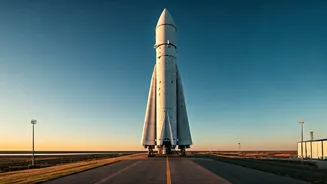
A recent orbital mission marked a pivotal moment for space exploration, with the successful recovery of a reusable launch system. The rocket’s first stage
booster executed a flawless descent, touching down precisely on its designated landing platform. This achievement represented the second successful launch and subsequent landing for this particular booster, a testament to its robust design and operational reliability. It effectively solidifies the capability of the launch provider to recover and redeploy its hardware, a crucial step towards more sustainable and cost-effective space access. This successful recovery means the provider now officially possesses a viable reusable launch vehicle, signaling a new era in its spaceflight operations and demonstrating a significant advancement in aerospace engineering.
Satellite Mission Fails
In stark contrast to the launch vehicle's success, the primary payload of the mission encountered significant difficulties. The satellite, intended to function as a cell tower in space, was deployed into an orbital path considerably lower than planned by the rocket's second stage. This unintended trajectory has rendered the satellite functionally useless for its intended purpose. According to a statement from the company responsible for the satellite, it did successfully separate from the launch vehicle and power on. However, the achieved altitude was insufficient for sustained operations using its on-board propulsion systems. Consequently, the satellite is now on a trajectory to de-orbit, meaning it will re-enter Earth's atmosphere and burn up. This outcome represents a critical setback for the satellite operator's ambitious plans.