



SPARCS: Stellar Insights
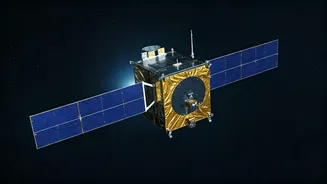
The Science of Protoplanetary Disks Around Cool Stars (SPARCS) mission represents a pioneering effort in astrophysics. Its primary objective involves scrutinizing
the ultraviolet (UV) light emitted by stars, particularly those smaller and cooler than our sun. This UV light is crucial for understanding the atmospheres of these stars and how they interact with their surrounding planetary systems. The SPARCS mission, utilizing a pair of small satellites, aims to gather UV data with unprecedented precision. By analyzing this data, scientists expect to gain invaluable insights into the processes shaping planetary formation and the potential habitability of exoplanets. The mission's focus on cool stars is strategic. These stars are known for being exceptionally long-lived, allowing ample time for planets to develop and evolve. Studying the interactions between these stars and their planetary systems helps us understand the conditions that may lead to the emergence of life elsewhere in the universe. SPARCS therefore has the potential to help us better understand the formation of new worlds and search for signs of life on them.
BlackCAT: Cosmic Mysteries
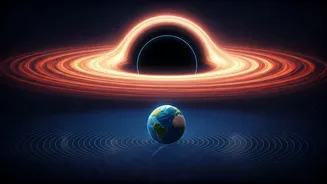
Complementing SPARCS, the BlackCAT mission shifts focus to the enigmatic realms of black holes. BlackCAT, an acronym for Black Hole Accretion Tomography, is designed to observe the high-energy processes occurring around supermassive black holes located at the centers of galaxies. These black holes are colossal gravitational entities that consume matter and emit powerful radiation, including X-rays. BlackCAT will use its specialized instruments to detect and analyze this X-ray emission. By carefully studying the changes in the X-ray light, scientists hope to create 'tomographic' maps that depict the environment near the black hole. These maps would help us better understand the processes of accretion, where matter spirals into the black hole. Moreover, it will provide crucial insights into how supermassive black holes influence the evolution of their host galaxies. The data gleaned from BlackCAT will be a valuable component in unlocking the secrets held by these celestial titans.
CubeSats: Tiny Powerhouses
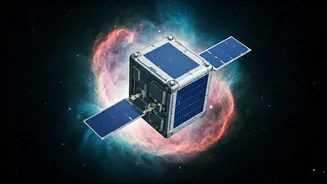
Both SPARCS and BlackCAT are based on the innovative CubeSat platform. CubeSats are miniature satellites standardized into a 10cm x 10cm x 10cm cube. Because of their size and design, these CubeSats offer a cost-effective way to launch advanced scientific instruments into space. They are significantly less expensive to build and launch than their larger counterparts, opening up new opportunities for researchers. This affordability allows for more frequent and targeted missions, accelerating the pace of discovery. CubeSats utilize readily available commercial components, which helps to streamline the construction process. Despite their small size, CubeSats are powerful enough to carry advanced scientific instruments, allowing for complex observations. The success of CubeSats like SPARCS and BlackCAT highlight the potential of these miniature spacecraft to make significant contributions to astronomy and astrophysics. These missions demonstrate that ground-breaking science can be done in small packages, offering the opportunity for wider participation and innovation.
Technological Advancements
The SPARCS and BlackCAT missions also showcase technological advancements, particularly in instrument design and data processing. SPARCS utilizes advanced UV spectrographs to measure the ultraviolet light emitted by stars. The spectrographs are designed to be extremely sensitive and precise, allowing for detailed analysis of the stellar atmospheres. For BlackCAT, the mission employs sensitive X-ray detectors designed to capture the high-energy emissions from black hole accretion disks. The data from both missions will be processed using advanced algorithms to extract the relevant scientific information. This requires sophisticated software designed to deal with the vast amounts of data collected and remove noise. Furthermore, the missions rely on miniaturized electronics, communication systems, and power supplies to operate within the constraints of the CubeSat platform. The development of such technologies is pivotal. The successful deployment of SPARCS and BlackCAT will inspire continued innovation in the field, further pushing the boundaries of space exploration, and opening doors for future discoveries.
Impact on Astronomy
The SPARCS and BlackCAT missions promise to have a profound impact on the field of astronomy, contributing to our understanding of a wide range of celestial phenomena. SPARCS will significantly improve our knowledge of star formation and planetary systems, providing crucial data on exoplanet habitability and the processes that shape planetary environments. The detailed study of the UV radiation emitted by cool stars will help scientists determine the composition of exoplanet atmospheres and search for biosignatures, indicators of life. BlackCAT, on the other hand, will offer invaluable insights into the behavior of supermassive black holes. By studying how these black holes feed on matter and interact with their surroundings, scientists can learn more about how galaxies grow and evolve. The data from BlackCAT will also help validate theoretical models of black hole accretion and improve our understanding of general relativity in extreme gravitational environments. Both missions will contribute to the ongoing exploration of the universe, and likely lead to unforeseen discoveries.