






A New Transit Artery
For a long time, navigating Bengaluru presented a dual nature of fascination and considerable challenge. The city, renowned as India's technology hub,
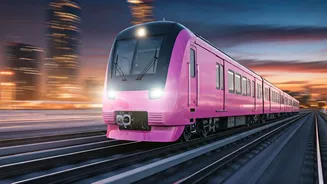
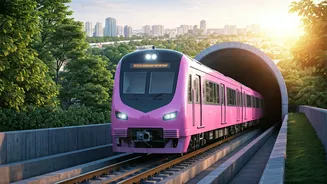
was perpetually in motion, characterized by its notorious traffic congestion, unpredictable journey durations, and the often lengthy commutes. However, the impending arrival of Bengaluru's Metro's Pink Line, with a partial opening slated for May, is poised to significantly alter the urban exploration landscape by fostering improved connectivity among vital districts. This new metro corridor is designed to link crucial areas such as Kalena Agrahara, Tavarekere, Dairy Circle, MG Road, Shivajinagar, and Nagawara. The primary objective is to make intra-city travel substantially quicker and considerably more reliable than previous methods, offering a much-needed respite from the city's historical transportation woes.
Connecting Landmarks and Local Life
The strategic route of the Pink Line is set to weave through diverse and significant regions of Bengaluru. It will extend to areas like Dairy Circle and Lakkasandra, bringing travelers closer to neighborhoods like Langford Town, which are proximate to the city's vibrant cultural and commercial heart. Further along, the line will serve the Rashtriya Military School, and then proceed to MG Road and Shivajinagar, two undeniably central urban hubs in Bengaluru. The line's expansion continues, linking Shivajinagar to Tannery Road, a stretch spanning approximately 2.88 kilometers, and then extending further by about 4.59 kilometers from Tannery Road to Nagawara, with stops at Venkateshpura and Kadugondanahalli. These locales have historically posed accessibility challenges for visitors relying solely on public transport. The transformative impact for any traveler is profound: this metro line is envisioned not just for daily commuters but as a gateway to discovering new facets of the city.
Beyond the Tourist Trail
What makes this particular metro extension exceptionally compelling is its potential to unlock experiences beyond the well-trodden tourist paths. While MG Road and Shivajinagar are undeniably prominent landmarks, recognized by nearly every visitor for their extensive shopping opportunities, heritage walks, bustling markets, and diverse food streets, Bengaluru offers so much more. The Pink Line promises to reveal these deeper layers of the city. Areas like Pottery Town, situated near Cantonment, or residential districts such as Nagawara, offer a more authentic and grounded perspective of Bengaluru's everyday life. These are the places where travelers can step away from curated tourist environments and genuinely immerse themselves in the city's real character, experiencing its streets and eateries authentically. One of the most significant advantages the Pink Line offers is reclaimed time. Bengaluru's notorious traffic has always been a major constraint, dictating what is achievable within a set period, where even short distances could necessitate an hour-long journey. With the distinct sections of the metro, movement throughout Bengaluru becomes significantly more predictable, a tremendous benefit for any traveler looking to maximize their visit.
Enhancing City Accessibility
The expansion of this extensive metro network significantly enhances Bengaluru's accessibility, particularly for those visiting the city for the first time. A well-developed and integrated transit system diminishes the reliance on taxis or ride-sharing services, presenting a more economical and far more efficient method for traversing the urban landscape. Crucially, however, the Pink Line promises to reshape perceptions of Bengaluru. As it is launched in phases, it represents more than a mere addition to the city's infrastructure; it signifies a fundamental shift in how one experiences Bengaluru. The city transforms from a place that demands considerable patience for navigation into a destination that can be explored with newfound ease and pleasure, opening up its many wonders to all.