






Scalable Space Living
Max Space, a venture founded by former Blue Origin personnel, has introduced a groundbreaking expandable space habitat concept aimed at supporting future
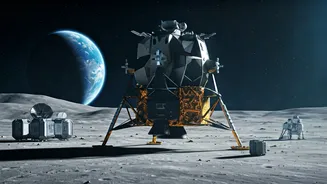
endeavors on the Moon and in deeper reaches of space. The core mission is to provide adaptable and growing living and working areas, essential for sustained human operations far from Earth. These habitats are engineered to launch in a highly compressed state, then unfurl to offer a considerably larger volume once they reach their destination, whether that's in orbit or on a celestial body. This innovative approach is vital for establishing enduring human outposts on the Moon and potentially paving the way for future Martian expeditions. The company's emphasis on a scalable architecture signifies a forward-thinking strategy that envisions modular, evolving habitats capable of expanding alongside the burgeoning needs of space exploration programs and commercial ventures.
Advanced Habitat Technology
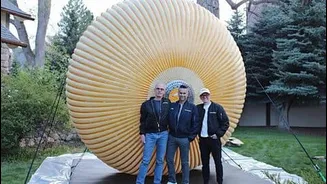
At the Space Foundation's 41st annual Space Symposium, Max Space showcased a substantial sub-scale prototype of its expandable habitat, providing a tangible demonstration of its potential. Saleem Miyan, the co-founder and CEO, emphasized that this is more than a mere model; it represents a fundamentally new strategy for constructing space infrastructure. The technology promises significantly amplified habitable volumes, reduced launch mass, and a lessened logistical burden. Miyan highlighted its suitability for commercial space stations in low Earth orbit, lunar surface systems, and even deep space missions. He asserted that for permanent human settlements on the Moon and in space to become a reality, adaptable and practical 'real estate' designed for off-world living and operations is imperative. Max Space's approach is rooted in over three decades of material science expertise, which they term 'Practical Readiness of Materials' (PRM), ensuring their designs are robust enough for extended space flights and lunar habitation.
Partnership and Future Vision
The development of next-generation space habitats is geared towards expanding humanity's reach, and Max Space is at the forefront of this evolution. Their lightweight expandable habitat can expand to twenty times its launch size after deployment, enabling a fully equipped, large habitat to be transported on a single SpaceX Falcon 9 rocket. This efficiency is crucial for lowering the cost and complexity of space missions. A significant strategic partnership was recently formed between Max Space and Voyager Technologies. Dylan Taylor, chairman and CEO of Voyager, stated that this collaboration underscores a major shift in how humans will inhabit and function in space. He further noted that sustained lunar operations necessitate infrastructure built for durability, adaptability, and efficient execution. The Moon is no longer just a point of visitation but an active operational zone within an expanding space economy, demanding advanced solutions.
Development Path to Mars
Max Space's commitment to pioneering expandable structure technology is evident in their phased development plan, which includes extensive ground validation and plans for in-space demonstrations later this decade. This strategic path is meticulously aligned with NASA's exploration timelines, aiming to establish operational capabilities for both lunar and Martian missions. The partnership with Voyager Technologies is integral to this progression, focusing on bringing these advanced habitat solutions to fruition. The ultimate goal is to provide the reliable and scalable infrastructure needed to support long-duration human missions and permanent settlements on celestial bodies. This forward-looking approach ensures that as humanity ventures further into space, the necessary living and working environments will evolve to meet the challenges and opportunities of deep space exploration.