






Harvesting's Subtle Nuances
Harvesting tomatoes, at first glance, seems straightforward, however, numerous factors complicate the process for robots. Measuring the ease of harvesting
is far more complex than it appears. The angle at which a tomato cluster presents itself, the density of the foliage, and the firmness of the tomatoes all play crucial roles in determining whether a robot can successfully and efficiently gather the fruits. These hidden details are central to a robot's ability to pick ripe tomatoes without causing damage or slowing down the overall harvesting operation. Researchers are therefore intensely focused on developing models that can effectively measure these subtle nuances, which is the foundational work to facilitate smoother harvesting processes using automated systems.
Decoding Harvesting Success
Several hidden details dramatically affect the likelihood of a successful harvest. For instance, the type of tomato variety cultivated in greenhouses will influence the robots' strategy. Some tomato varieties have clusters that are tightly packed and difficult for robots to reach without causing damage. Other aspects, like the ripeness of the tomatoes and their firmness, are also very important; overripe or soft tomatoes are easily damaged, making them challenging for robots to handle. The positioning of the tomatoes within the cluster, and the density of the surrounding leaves, also presents significant obstacles. Successfully navigating these subtleties requires advanced sensory systems and sophisticated algorithms for robots to adapt in real-time.
Shared Work's Potential Future
The development of tomato-picking robots points to a future where humans and machines collaborate in greenhouses. Rather than completely replacing human workers, robots are more likely to augment the existing workforce. Robots could be assigned tasks like inspecting large areas of crops, freeing up human workers to focus on other tasks that require their unique skills, such as recognizing and dealing with problems that robots are not easily able to deal with. This collaboration could lead to increased efficiency in tomato harvesting while also improving working conditions by reducing the physical strain on human workers. The integration of robots could also foster better data collection and analysis, allowing for more informed decisions in crop management.
Smarter Robot Adaptations
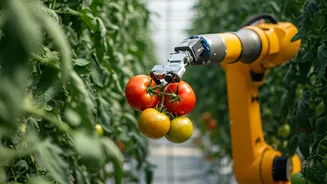
To address the challenges in harvesting, Smarter tomato-picking robots are being created that are capable of learning and adapting to varying conditions. These robots employ advanced sensors, including high-resolution cameras and tactile sensors, to gather information about the tomatoes and their environment. Sophisticated algorithms then analyze this data to adjust the robot's actions in real-time. For instance, if a tomato cluster is densely packed, the robot can modify its approach to avoid damaging the fruit or the surrounding leaves. This ability to adapt and learn is critical because it allows the robots to function efficiently across a range of different settings, making them more practical for real-world agricultural applications.
Changing Angle Learning
One of the critical factors for these robots to perform is their ability to change their angle effectively during the picking process. Tomato clusters present themselves in many orientations, which creates a huge problem to resolve. A robot’s ability to adjust its picking angle is essential to reach and harvest tomatoes without causing any harm. Robots must be able to recognize the spatial arrangements of the tomatoes to change their approach angle. Robots equipped with advanced algorithms allow them to efficiently gather the harvest, improving the speed and yield. This level of adaptability ensures that the robots can be used in different settings while maintaining high harvest quality.