





A New Generation Emerges
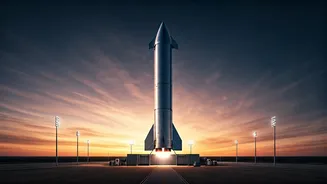
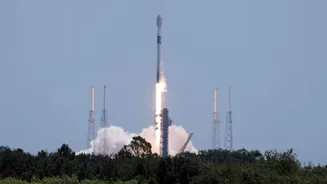
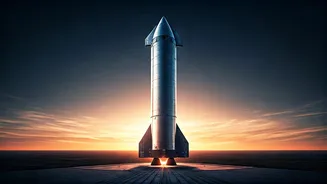
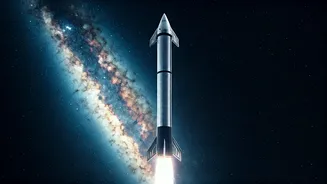
SpaceX is on the cusp of launching Starship Version 3 (V3), a dramatically redesigned rocket poised to push the boundaries of space exploration. This latest
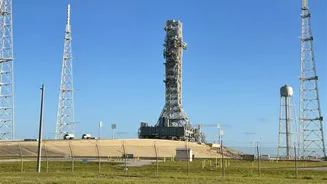
iteration represents a significant leap from its predecessors, building upon the lessons learned from eleven prior test flights. The V3 design emphasizes enhanced power, increased resilience, and a more advanced capability set, bringing SpaceX closer to achieving its goal of a fully reusable launch system. The launch will originate from a newly constructed launch pad at the Starbase facility in South Texas, signifying a move towards a more mature and operational Starship architecture. This evolution is critical for supporting high flight rates, rapid reuse, and the complex orbital refueling maneuvers necessary for ambitious projects like NASA's Artemis program, which aims to land astronauts on the moon.
Power and Precision Upgrades
Starship V3 boasts a notable increase in size, standing approximately 5 feet taller than previous models, and a substantial boost in power. Both the Super Heavy booster and the Ship upper stage are now equipped with SpaceX's advanced Raptor 3 engines, which are more refined, potent, and dependable than the preceding Raptor 2 units. The Super Heavy booster, in particular, will feature 33 of these new engines, generating an impressive thrust exceeding 18 million pounds at liftoff. In a design shift, the Super Heavy booster will utilize three enlarged grid fins, each about 50% larger than before, positioned lower on the booster's structure. These grid fins are instrumental in guiding the booster back to Earth for precise landings. This configuration is intended to mitigate heat exposure during the 'hot-fire' staging process, where the Ship begins igniting its engines before fully separating from the Super Heavy booster. The hot stage ring itself has also been re-engineered and is now integrated into the top of the booster, a departure from the previous V2 design where the interstage piece detached and fell back to Earth.
Internal Enhancements and Fuel Systems
Significant internal modifications have been made to the Super Heavy booster to optimize its performance. A redesigned fuel transfer tube, now substantial in size, facilitates faster and more synchronized ignitions of its 33 Raptor 3 engines during both launch and landing sequences. Furthermore, changes to the aft end of the rocket, where the engines are housed, have been implemented to enhance thermal protection. This includes a more integrated approach to the rocket's fuel transfer, power, and computer systems, ensuring greater durability. The Ship upper stage also benefits from a series of crucial upgrades, including revised plumbing and wiring layouts in its aft section, a larger propellant tank, and an improved reaction control system. A major focus has been on enhancing how Ship manages cryogenic fuels, with the addition of four docking ports along its body and a specialized system for managing cryogenic propellant in zero gravity. This capability is paramount for Starship's ability to travel beyond low-Earth orbit, necessitating orbital refueling missions.
Lunar Ambitions and Artemis Role
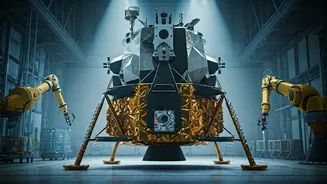
The development of Starship V3 is intrinsically linked to its potential role in NASA's Artemis program, which aims to return astronauts to the moon. A critical technology that SpaceX must demonstrate is the ability to store and transfer cryogenic propellants between vehicles, a feat yet to be attempted. This capability is essential for Starship to venture beyond low-Earth orbit and is a key qualification requirement for crewed lunar missions. SpaceX, as one of two companies contracted to provide lunar landers, must meet NASA's stringent standards, which include successful uncrewed lunar landings and safe returns to orbit, followed by rendezvous and astronaut transfer. NASA is targeting the Artemis 4 mission in late 2028 for the first Starship lunar landing, contingent on the vehicle's readiness and successful demonstrations of these advanced capabilities. NASA is also planning a lunar fly-by mission in late 2027, where Orion will practice docking with Starship and/or Blue Origin's Blue Moon lander, assessing their readiness for future crewed endeavors.
Mission Objectives and Future Implications
The upcoming debut flight of Starship V3 carries substantial weight, with a packed agenda of critical objectives. Success on this mission includes the deployment of 22 Starlink mass simulator payloads, which will be instrumental in testing upgraded heat tile dispersion and evaluating the underside of the Ship for any missing or damaged tiles. Furthermore, the mission will involve an in-space relight of a Ship Raptor 3 engine and the execution of various test maneuvers designed to stress the Ship during its reentry phase. Both stages are slated to perform deceleration burns for controlled splashdowns offshore. Any significant setbacks during this mission could have profound implications for both SpaceX's ambitious launch schedule and NASA's lunar exploration timeline. The successful completion of these objectives will pave the way for Starship's operational phase, enabling its pivotal role in future space exploration and resource utilization.