



From Slump to Spectacle
Asia's largest tulip garden in Kashmir has emerged as a beacon of hope, instrumental in rejuvenating the region's tourism sector. After a period of significant
decline, exacerbated by the Pahalgam attack in April 2025 which brought visitor numbers to a standstill, the garden has witnessed an astonishing resurgence. During the 30 days of the 2026 spring season alone, it attracted over 3.5 lakh visitors. This remarkable influx of tourists represents a substantial recovery, occurring precisely one year after the unfortunate incident in Pahalgam's Baisaran Valley. The previous year, 2025, saw a drastic drop in tourism, with total arrivals in Kashmir plummeting to 9.16 lakh, a stark contrast to the 26 lakhs recorded in 2024. The success of the 2026 season is a testament to the collective efforts to rebuild confidence and showcase the region's enduring allure.
Floral Grandeur and Safety
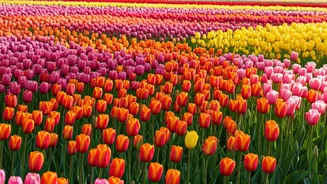
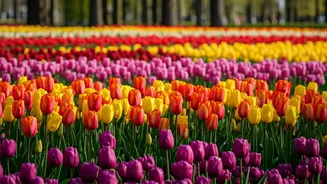
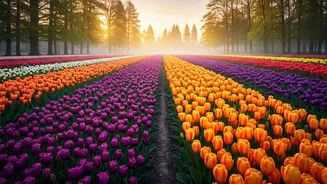
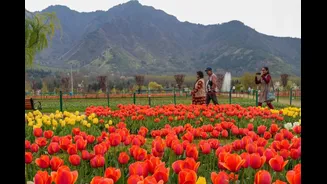
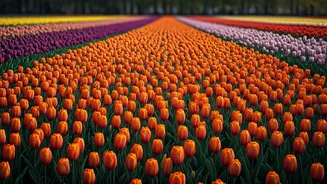
The 2026 tulip season captivated visitors with an awe-inspiring display of 1.8 million tulips, showcasing more than 70 distinct varieties. Complementing this floral spectacle were approximately 100,000 other bulbous flowers, including vibrant daffodils, fragrant hyacinths, and elegant narcissus. Beyond the natural beauty, the authorities introduced engaging new attractions such as dedicated "selfie points" and cultural zones that celebrated local handicrafts. A robust publicity campaign orchestrated by the Jammu and Kashmir authorities played a crucial role in revitalizing the tourism industry. By mid-April 2026, the garden had already welcomed over 3.5 lakh visitors, with a notable contingent of around 1,200 international tourists among them. Crucially, significant enhancements in safety measures were implemented for the 2026 season, fostering a sense of security and confidence among travelers, leading many to express surprise at the welcoming and peaceful environment they encountered.
Visitor Confidence Restored
Tourists who experienced Kashmir during the 2026 tulip season frequently commented on the stark difference between their preconceptions and the reality they encountered. Many praised the region's breathtaking beauty while emphatically stating that Kashmir is entirely safe for travel, encouraging others to visit without apprehension. The enhanced security arrangements implemented by the authorities received widespread commendation. Rupali Gambhir, a tourist from Nagpur, shared her experience, saying, "There is no fear. We feel very safe. People are very cooperative. We felt nothing like fear here. The garden is very beautiful and it’s really paradise on earth." Similarly, Sadiq Mohammed from Mumbai, on his fourth day of exploring Gulmarg, Sonamarg, and the tulip garden, with plans for Pahalgam, noted the visible presence of CRPF soldiers at every location, who also offered guidance. He highlighted that even at night, security measures were reassuring, and he had not felt insecure at any point during his visit, expressing a desire to return.
Boosting the Economy
The successful 2026 season of the Tulip Garden is being hailed by tourism stakeholders and the Jammu and Kashmir government as a pivotal "positive step" towards the comprehensive restoration of Kashmir's tourism economy. During the bloom period, hotel occupancy rates across the valley reportedly reached an impressive nearly 70%. While the visitor numbers for the 2026 Tulip Show, which featured an extensive collection of flowers, were lower than the previous year due to geopolitical tensions affecting international travel, the event significantly stimulated tourism activity. This year's show is viewed as a promising commencement to the tourism season, with optimistic projections for a higher overall tourist influx in 2026. To better accommodate this anticipated growth, several new and distinctive tourist destinations have been curated and added to the region's offerings, providing visitors with even more diverse experiences to explore.