






Physical Appearance Distinctions
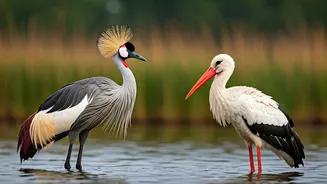
At first glance, both cranes and storks present a striking silhouette with their long legs and necks, often leading to confusion. However, a closer look
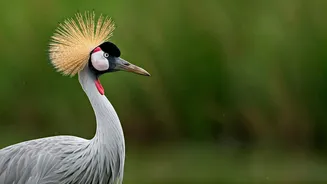
reveals key differences. Cranes tend to appear more slender, characterized by straighter, thinner necks that they typically hold extended, both when standing and in flight. Their heads often display bare red skin or a distinct crown. Storks, conversely, are generally more robust and bulkier in build. They possess longer, heavier bills and their heads are typically fully feathered. While resting, storks often curve their necks inwards. Though both species stand tall on long legs, the crane's overall carriage suggests greater elegance, whereas the stork's appearance is sturdier. The way they hold their necks when on the ground—straight out for cranes and curved inwards for storks—is a particularly telling visual cue.
Size and Wingspan Variations
When considering their dimensions, cranes often boast a more impressive wingspan, typically ranging from 5.5 to over 8 feet. Species like the Sarus crane are recognized among the tallest flying birds. Storks, while still substantial, generally have wingspans between 5 and 7.5 feet, though some species, like the Marabou stork, can rival the size of certain cranes. In terms of overall height and perceived stature, cranes appear more upright and taller, projecting an image of refined poise. Storks, on the other hand, seem heavier-built. While size varies considerably across different species within both families, cranes commonly hold the advantage in height, making them appear to tower over their surroundings when seen in open fields.
Behavioral Contrasts Unveiled
The social behaviors of cranes and storks offer a fascinating contrast. Cranes are known for their elaborate courtship rituals, which involve intricate dances featuring bows, jumps, and even mock stick tossing, often performed to secure lifelong mates. They are also quite vocal, engaging in loud duets that can echo across considerable distances. Storks, in stark opposition, are considerably quieter birds. Instead of vocalizations, they communicate through bill clattering. While cranes are often observed flocking in large numbers during migration, storks tend to forage either alone or in smaller, more dispersed groups. Cranes seem to express a greater degree of social bonding and passion, whereas storks appear to prioritize practical hunting and a more solitary existence.
Flight and Dietary Habits
Observing these birds in flight reveals further distinctions. Cranes typically maintain a steady wingbeat, often flying in distinctive V-formations with their necks held straight, and are known to trumpet calls mid-air. Storks, in contrast, are masters of gliding, effortlessly riding thermals with silent, buoyant flight. Their diets also differ significantly. Cranes are omnivorous, feeding on a variety of seeds, roots, insects, and amphibians like frogs. Storks, however, are more carnivorous, primarily preying on fish, reptiles, and small mammals found in shallow waters. They are also known to be opportunistic scavengers, contributing to their more varied carnivorous diet.
Nesting Practices and Locations
The nesting habits of cranes and storks highlight their different approaches to raising young. Cranes prefer to build their nests directly on the ground, typically in wetland areas. They usually lay one to two eggs, and both parents are fiercely protective and involved in guarding them. Storks, on the other hand, opt for elevated nesting sites. They construct large nests, often in trees, on cliffs, or even on rooftops, and these structures are reused and expanded upon year after year, sometimes growing to weigh hundreds of pounds. Storks typically lay between two and five eggs. While cranes defend their ground nests assertively, storks choose the safety of height for their brood, a preference for high, secure locations over vocal ground defense.