








Transformative Leadership Celebrated
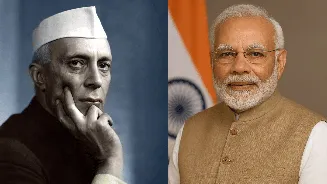
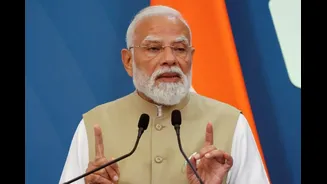
Corporate India has extended its congratulations to Prime Minister Narendra Modi for achieving the distinction of being the longest-serving continuous
Prime Minister. This milestone is being widely celebrated, with industry leaders attributing India's significantly improved global standing and robust economic trajectory to his transformative leadership. The administration's commitment to structural economic reforms has been a cornerstone, creating an environment conducive to growth and investment. This period has witnessed a remarkable uplift in India's international voice and influence, a testament to the strategic policies implemented. The overall sentiment within the business community is one of optimism and recognition for the sustained efforts in steering the nation towards economic prosperity and a stronger presence on the world stage.
Economic Reforms & Growth Drivers
The economic landscape under Prime Minister Modi's leadership has been marked by a series of impactful reforms aimed at fostering growth and stability. Initiatives such as the Goods and Services Tax (GST) have streamlined indirect taxation, while policies like the Production Linked Incentive (PLI) scheme have bolstered domestic manufacturing, particularly in sectors like electronics and automobiles. The government's focus on ease of doing business has led to significant improvements in India's ranking on global indices. Furthermore, the emphasis on digital transformation has seen a dramatic reduction in mobile data costs, making digital services accessible to a much wider population. This era has also witnessed substantial foreign direct investment (FDI) inflows, totaling $843 billion between 2014 and 2026, demonstrating increasing confidence in India's economic potential and the effectiveness of its reform agenda. The 'Startup India' initiative has also catalyzed entrepreneurship, creating a vibrant ecosystem for new businesses.
Industrial Prowess & Innovation
India Inc. is showcasing remarkable progress across various industrial sectors, fueled by strategic partnerships and technological advancements. The steel industry, for instance, sees innovation through collaborations like AM/NS India's partnership with IIT Roorkee to advance manufacturing and steel technologies. JSW Steel reported a significant 15% rise in crude steel output for May, reaching 22.93 lakh tonnes, underscoring operational efficiencies. In the renewable energy sector, Meta Platforms is actively investing, partnering with Fourth Partner Energy for 88 MW and CleanMax for over 900 MW of solar and wind projects, highlighting a strong commitment to sustainability. The electronics manufacturing services (EMS) market is projected to reach $150 billion by FY30, driven by government support and global supply chain diversification. Furthermore, the defense sector is poised for substantial job growth, with indigenous technology adoption expected to increase its value to $36.45 billion by 2026, reflecting a strategic push towards self-reliance.
Financial Market Dynamics
India's financial markets are experiencing dynamic shifts, influenced by both domestic policies and global economic currents. The Indian Rupee has shown resilience, often appreciating against the US dollar due to factors like retreating crude oil prices and Central Bank interventions. For instance, the rupee rose 20 paise to close at 95.41 against the US dollar. Foreign Portfolio Investor (FPI) inflows have seen a notable surge, particularly into government securities (G-Secs), following their inclusion in the Bloomberg Global Aggregate Index and tax exemptions. While equity mutual fund inflows experienced a dip to a one-year low of Rs 22,908 crore in May, indicating market caution amid global uncertainties, the overall sentiment remains cautiously optimistic. The Reserve Bank of India (RBI) has implemented measures, such as a US dollar-rupee forex swap facility for FCNR (B) deposits, aimed at attracting foreign capital and stabilizing the rupee. Bank stocks, particularly Public Sector Banks, have also shown strength, buoyed by RBI's liquidity initiatives.
Infrastructure & Logistics Expansion
Significant investments are being channeled into bolstering India's infrastructure and logistics capabilities to support economic growth and enhance connectivity. A new logistics park is set to be established in Indore with an investment of Rs 600 crore, a move expected to significantly boost Madhya Pradesh's logistics infrastructure and supply chain efficiency. The Delhi government is actively seeking land from the Delhi Development Authority (DDA) to develop warehousing and logistics hubs, aiming to decongest the city and improve freight movement through AI-driven planning. In the aviation sector, while IATA's Chief Willie Walsh commends India's market potential, he also highlights challenges posed by high taxation and fuel costs. Nonetheless, Air India is launching 'Easy Connect' hub-and-spoke flights from Varanasi, enhancing connectivity from Tier 2 and 3 cities. Noida International Airport has successfully completed crucial operational trials, signaling its readiness for commercial flights.
Sustainable Development & Social Impact
A strong emphasis is being placed on sustainable development and social impact, reflecting a commitment to a more equitable and environmentally conscious future. The NSE has pledged to allocate 10% of its annual Corporate Social Responsibility (CSR) corpus to projects listed on the NSE Social Stock Exchange, promoting transparency and accountability in social impact initiatives. Hindustan Zinc is partnering with Sulfozyme Agro to advance sustainable metal recovery techniques, reinforcing the MSME ecosystem in Rajasthan. Furthermore, Tata Steel's extensive CSR efforts have positively impacted 6.9 million lives across six states through initiatives in healthcare, education, and tribal development. In the clean energy domain, Meta Platforms is collaborating with energy partners to develop substantial renewable energy capacity, demonstrating a drive towards emissions reduction. The government's commitment to the PM Surya Ghar scheme encourages rooftop solar installations, with options for consumers to forgo subsidies.