




Atmospheres Vanish
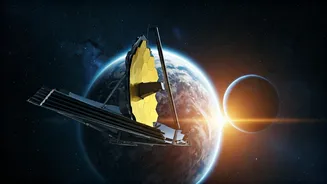
Astronomers initially harbored significant optimism that the newly deployed James Webb Space Telescope (JWST) would swiftly detect atmospheric signatures
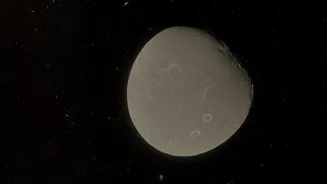
indicative of life on distant planets. However, recent observations of planets like LHS 3844 b have revealed them to be essentially airless, rocky worlds, prompting concern within the scientific community. This pattern has repeated across several rocky exoplanets studied, yielding no concrete evidence of Earth-like conditions conducive to life as we understand it. A key challenge identified is the nature of the stars these planets orbit: M dwarfs, the galaxy's most abundant stellar type. While their dimmer nature allows planets to be closer and thus easier for JWST to observe, their intense flaring and radiation output can violently strip away any nascent atmospheres from these close-in worlds. This raises questions about the habitability of the vast majority of known exoplanets orbiting M dwarfs, though scientists theorize that thinner, Earth-like atmospheres might still elude JWST's current detection capabilities.
Earth's Giant Eye
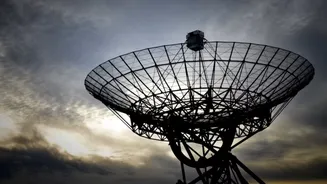
To overcome JWST's limitations in detecting thinner atmospheres and to explore new targets, a colossal ground-based telescope is on the horizon. The European Southern Observatory's Extremely Large Telescope (ELT), slated for completion in 2029, will be the world's largest optical and infrared observatory. Unlike JWST, which primarily observes transiting exoplanets, the ELT is designed for direct imaging. This capability allows it to study a wider array of planets and potentially build up detailed observations over extended periods, searching for subtle biosignatures. However, the ELT will still face challenges when observing planets around M dwarfs, as the stars' inherent activity can interfere with or mask planetary signals, making definitive detection of life a complex and demanding endeavor. Despite these hurdles, the ELT represents a crucial next step, offering astronomers a tangible pathway to search for extraterrestrial life in the coming decade, with hopes of detecting even just oxygen as a sign.
Sun-Like Star Focus
Looking further ahead, NASA is developing the Habitable Worlds Observatory (HWO), a flagship space telescope intended for launch in the 2040s. This observatory is specifically engineered to identify Earth-like exoplanets orbiting Sun-like stars. The rationale behind this focus is rooted in our single known example of life – Earth, which orbits a Sun-like star. By studying these systems, astronomers aim to find true 'Earth twins' and search for signs of life. The HWO's mission holds significant potential: even if no life is found, it could establish the first robust statistical limits on the prevalence of detectable life around Sun-like stars. Furthermore, such a powerful instrument would inevitably discover other types of celestial bodies, leading to a broader advancement in planetary science. The expectation is that finding one instance of life would likely lead to discovering more, given the tendency for new astronomical discoveries to appear in multiples. The observatory is designed with the understanding that Earth twins might be rare, but its targeted approach offers the most promising avenue for a definitive answer in the foreseeable future.
The Long View
Despite the promising designs of future observatories like the HWO, the path to confirming extraterrestrial life remains fraught with challenges. Even if a promising signal is detected from an exoplanet, scientists will need to meticulously analyze all available data to contextualize the findings, ensuring they are not misinterpreting mundane phenomena as signs of life, much like differentiating methane on Neptune from potential biological activity. The HWO's focus on Sun-like stars introduces its own uncertainties, as the actual frequency of Earth-like planets around such stars is still debated, ranging from one potentially habitable world per six stars to one per star. If these 'Earth twins' prove exceedingly rare, the HWO's survey might yield insufficient data. Nevertheless, researchers deeply involved in guiding the HWO's development express strong confidence in its potential to finally answer the profound question of our solitude in the universe. While the long-term prospects are clear, the universe always holds the possibility of surprise, with a single groundbreaking observation potentially altering our understanding.