







Understanding Balcony Solar
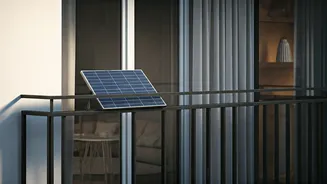
Balcony solar systems are compact energy solutions, typically featuring one to a few solar panels. Many regions are looking to standardize these systems,
often capping them around 1,200 watts, which is significantly smaller than typical residential rooftop installations. The core technology involves panels connected to an inverter that transforms direct current (DC) electricity generated by the sun into alternating current (AC), the form of power used in our homes. This AC power is then channeled through a standard 120-volt outlet, feeding directly into your home's existing electrical infrastructure. While modest in output, an 800-watt system can effectively power essential appliances like a refrigerator or several smaller devices during daylight hours. A key advantage is their ease of setup; usually, one or two individuals can install a system in under an hour, without needing professional assistance. In areas with specific legislation supporting balcony solar, homeowners often bypass the need for utility permission, which is a requirement for larger rooftop arrays, and also avoid associated utility fees.
Flexible Installation Options
The physical placement of balcony solar panels isn't strictly limited to balconies. As long as they can be securely mounted and receive ample sunlight, panels can be installed on decks, patios, porches, fences, or even in yards. However, it's crucial to be aware of potential local restrictions. Cities or homeowner associations might have specific regulations governing the placement of solar equipment. If you're renting your property, it's advisable to review your lease agreement to ensure there are no clauses prohibiting external installations like solar panels.
Addressing Safety Concerns
A key distinction between balcony solar and rooftop solar lies in their connection points. Balcony solar systems feed electricity directly into a home's circuitry via a wall outlet, whereas rooftop systems connect to the main electrical panel. This difference has raised some safety questions, although solutions are being developed. Concerns include the potential for wall wiring to overheat if the solar panels produce excess power and circuit breakers fail to trip, creating a fire risk. There's also a risk of electric shock or electrocution if someone touches the plug prongs during operation or immediately after disconnection while the system is still energized. However, these hazards are being addressed through technical innovations, such as specialized plugs with integrated circuit breakers and no exposed conductive parts. Many states are mandating that manufacturers adhere to strict safety standards, with some requiring certification from recognized testing laboratories and compliance with electrical codes. While a specific national code for plug-in solar is still evolving, a new safety standard, UL 3700, has been established, and product certifications are expected soon, bringing reassurance to those interested in this technology. International examples, like Germany's widespread adoption of balcony solar with minimal safety incidents, further support its viability.
Blackout Resilience and Batteries
Balcony solar systems, as they are designed to connect to your home's grid, will cease to produce power during a blackout to ensure the safety of utility workers. However, this limitation can be overcome by integrating a battery system. If the solar panels are connected to a battery rather than directly feeding into your home's outlets, the generated solar energy can be stored for later use. This provides a reliable backup power source during outages. It's important to note the cost difference: while an inverter might cost around $399, a battery inverter combo with significant storage capacity can cost upwards of $1,499, adding a substantial investment for blackout protection.
Cost and Savings Potential
The investment for balcony solar systems typically ranges from a few hundred dollars to over $1,000, depending on the system's size and specifications. These systems have the potential to significantly reduce household electricity bills, with estimated annual savings of around $500. For instance, in areas like Los Angeles and the San Francisco Bay Area, a two-panel, 800-watt system might be priced at $1,499, and a larger four-panel, 1,600-watt system at $2,348. These prices, ranging from $1.47 to $1.87 per watt before taxes, represent a competitive rate compared to the national average for rooftop solar installations, which can be around $2.70 per watt before incentives. The payback period for these balcony solar systems can be as short as four to five years, contingent on individual electricity consumption and utility rates. Once the initial cost is recouped, the power generated from sunny hours becomes essentially free for the lifespan of the panels, which are often warranted for 25 years.
Future Market Outlook
The landscape for balcony solar in the U.S. is poised for rapid evolution within the next year. As more states enact supportive legislation and manufacturers release compliant products, the market is expected to flourish. Many companies are currently observing the regulatory environment, awaiting clearer guidelines before fully committing to product development. Once a critical mass of states officially permits balcony solar installations, it's anticipated that manufacturers will introduce a wave of innovative products designed for ease of use and enhanced safety for consumers. This influx of options and clearer regulations is expected to significantly boost adoption rates.