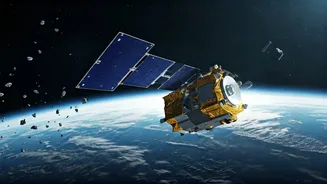









Diversifying Space Ventures
A significant shift is occurring in the space industry as a forward-thinking company, previously recognized for its ambitious private space station projects,
is now broadening its horizons into the realm of satellite manufacturing. This strategic pivot involves the creation and sale of sophisticated satellite buses, designed to cater to a wide spectrum of operators. These spacecraft are engineered for demanding applications across telecommunications, Earth observation, national security initiatives, and the development of comprehensive orbital data center constellations. The move signifies a robust expansion of the company's capabilities, aiming to capture a larger share of the burgeoning space market.
Leveraging Proven Technology
The foundation for this new satellite line is built upon technology that has already undergone rigorous testing and validation in the harsh environment of space. A crucial test flight, known as Haven Demo, successfully launched into low Earth orbit aboard a SpaceX Falcon 9 rocket. This mission was instrumental in verifying the performance of core systems, including propulsion, power management, and avionics – all critical components for future orbital outposts. The demonstrator performed exceptionally, meeting all objectives before executing a controlled deorbit into Earth's atmosphere. This on-orbit success has not only paved the way for the company's space station endeavors but also serves as a direct technological pathway for the newly announced spacecraft buses, ensuring reliability and operational readiness from the outset.
Innovative Satellite Bus Design
The initial offering within the Vast Satellite product portfolio is a satellite bus classified as 15 kilowatt-class. This platform is meticulously engineered to support a broad range of power-intensive missions, featuring highly adaptable configurations to meet diverse client needs. Weighing approximately 1,540 pounds (700 kilograms) when unfueled, this versatile bus can accommodate payloads exceeding 770 pounds (350 kg). It is designed for a nominal operational lifespan of five years in low Earth orbit, with provisions for future deployment in alternative orbital regimes. The company has set an ambitious target to launch a constellation of ten such spacecraft into orbit for the first time by the close of 2027.
Ambitious Future Endeavors
Concurrent with the development of its satellite manufacturing division, the company remains steadfastly committed to its pioneering space station project, Haven. The overarching goal for the Haven project is to establish a multi-module space station, designated Haven-2, which is slated to be operational by the early 2030s, coinciding with the retirement of the International Space Station. A critical precursor to Haven-2, the Haven-1 pathfinder, is scheduled for launch in 2027. Should this initial mission proceed as planned, the first module of Haven-2 is anticipated to launch in 2028, followed by subsequent module deployments every six months for a period of four years, meticulously building out the sophisticated orbital habitat.