





The Salt Empire
Salt, often referred to as "white gold," is a mineral of immense historical and practical significance. Beyond its culinary uses, salt has been vital for
food preservation and various industrial applications throughout history. India stands as one of the world's leading salt-producing nations, with a single state significantly dominating the country's vast output. This state's unparalleled contribution cements its status as the backbone of India's extensive salt industry, a reputation well-earned through its geographical advantages and favorable climate conditions.
Gujarat's Dominance Explained
The state holding the prestigious title of India's 'salt capital' is none other than Gujarat. This western Indian state is responsible for an astounding 75% of the nation's total salt production. Its commanding position is attributed to a confluence of factors, including an extensive coastline, arid weather patterns, and a unique geographical landscape that is ideal for salt cultivation. These elements collectively empower Gujarat to be the primary driver of India's substantial salt output, solidifying its vital role in the sector.
Rann of Kutch: A Salt Pan
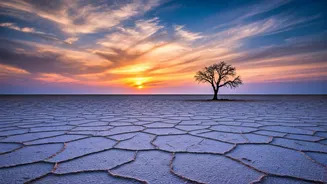
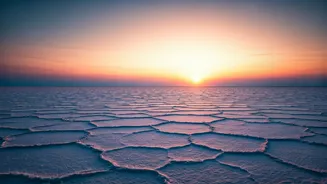
A pivotal element contributing to Gujarat's leadership in salt production is the Rann of Kutch region. This expansive area features vast, flat terrains, soil rich in salinity, and exceptionally high temperatures. These conditions create a perfect environment for large-scale salt farming. The intense heat of the sun causes seawater to evaporate rapidly, leaving behind substantial deposits of salt that are then ready for harvesting. The unique characteristics of the Rann of Kutch are thus instrumental in Gujarat's ability to produce salt in such massive quantities.
The Dazzling White Desert
During the winter months, both the Great Rann of Kutch and the Little Rann of Kutch undergo a stunning transformation, morphing into expansive, glistening white landscapes. Once the monsoon waters recede, the ground becomes covered with endless stretches of salt crystals, creating the renowned "White Desert." This remarkable natural phenomenon not only showcases the immense salt deposits but also draws thousands of tourists annually, especially during the vibrant Rann Utsav festival, turning the salt-rich plains into a major tourist attraction.
Key Production Hubs
Gujarat's status as the 'Salt Capital of India' is widely acknowledged due to its significant production figures. Key districts such as Kutch, Bhavnagar, Surendranagar, Jamnagar, and Porbandar are central to this extensive salt manufacturing. The salt produced in these regions is distributed extensively throughout the country for domestic use and industrial purposes, and a considerable amount is also exported to various international markets, highlighting Gujarat's global reach in the salt trade.
India's Global Standing
Globally, India ranks as the third-largest producer of salt, trailing only China and the United States. While other Indian states like Tamil Nadu, Rajasthan, Maharashtra, and Andhra Pradesh also contribute to salt production, Gujarat's output remains unparalleled. It's noteworthy that the famous White Desert of Kutch is entirely composed of accumulated layers of natural salt deposits, a testament to the region's geological richness and its significance in the salt industry.