







Brain Surgery Without Scalpel
Neurologists are increasingly highlighting the profound impact of strength training, often viewed solely for physical aesthetics, on our cognitive well-being.
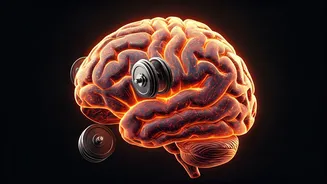
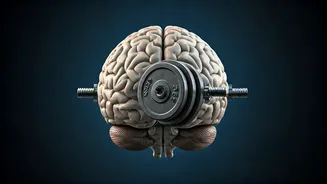
Dr. Sudhir Kumar aptly describes lifting weights as 'brain surgery without the scalpel,' emphasizing its critical role in maintaining and enhancing brain health. This perspective shifts the focus from mere muscle building to the significant neurological advantages that regular resistance exercise offers. It's about actively shaping a healthier, more resilient brain for the long term, not just sculpting a physique. This powerful form of exercise can actively combat the natural aging process of the brain, keeping it functioning optimally and reducing the likelihood of age-related cognitive decline. The intricate connection between our physical movements and our mental acuity is becoming increasingly evident, making strength training a vital component of holistic health.
Cognitive Longevity Boost
Strength training emerges as a potent strategy for achieving cognitive longevity, a concept Dr. Sudhir Kumar champions. Recent scientific findings indicate that consistent engagement in resistance training can significantly reduce one's predicted brain age, potentially by up to two years. While many experience a natural cognitive slowdown with age, this form of exercise actively promotes neural rewiring, fostering a younger and more agile brain that can maintain its peak performance for longer. This continuous neural adaptation means that as the external world may be slowing down, your brain is actively rejuvenating, enhancing its capacity for complex tasks and sustained focus. It's a proactive approach to preserving mental sharpness throughout life.
Executive Function & Memory
Beyond simply keeping the brain young, systematic reviews demonstrate that resistance training acts as a powerful stimulant for executive functions. These are the critical higher-level cognitive skills that govern our ability to plan, solve problems, and make sharp decisions. By enhancing these functions, strength training improves our capacity for strategic thinking and adaptive problem-solving in daily life. Furthermore, it significantly boosts working memory, enabling us to hold and process more information concurrently, which is invaluable in our fast-paced, distraction-filled world. This improved cognitive processing power also extends to attention span, allowing for greater focus and a reduced susceptibility to distractions, making it easier to concentrate on essential tasks.
Neurotrophic Factor Release
The mechanisms behind strength training's brain benefits are deeply rooted in its ability to stimulate the release of crucial neurotrophic factors. Notably, lifting weights triggers the production of Brain-Derived Neurotrophic Factor (BDNF) and Insulin-like Growth Factor 1 (IGF-1). These compounds function as potent 'fertilizers' for our neurons, vital for their survival, growth, and the formation of new neural connections. BDNF, in particular, plays a pivotal role in neuroplasticity – the brain's remarkable ability to reorganize itself. This process is fundamental for learning new information, consolidating memories, and adapting to new experiences. The increased availability of these factors essentially fortifies the brain's structure and function, supporting the integrity of white matter, which is essential for efficient neural communication.
Anti-Inflammatory Shield
Chronic neuroinflammation is a pervasive, yet often silent, threat to cognitive health, contributing significantly to age-related cognitive decline and 'brain fog.' Resistance exercise offers a powerful defense against this detrimental process. It initiates a cascade of biochemical shifts within the body that effectively dampen inflammation. By mitigating inflammatory responses in the brain, strength training helps to protect neural pathways from damage, preserving cognitive function over time. This anti-inflammatory effect is crucial for maintaining mental clarity, preventing the cognitive impairments associated with prolonged inflammation, and fostering a more resilient brain capable of withstanding the wear and tear of aging.
Accessible Routine & Progression
The remarkable brain benefits of strength training are accessible without requiring extensive gym facilities or heavy equipment. Effective workouts can be achieved using bodyweight exercises, resistance bands, or even light dumbbells. The key to unlocking these advantages lies in consistency and progressive overload. Dr. Sudhir suggests aiming for 2-3 sessions per week, focusing on fundamental compound movements like squats, deadlifts, rows, and presses. The principle of progressive overload is critical: workouts must continually present a challenge to stimulate adaptation and growth. If an exercise no longer challenges you, it will not bring about the desired changes in your brain and body. This principle ensures continuous improvement and sustained engagement with the training regimen.