






The Synthetic Snare
Many garments today are constructed from synthetic materials such as polyester, nylon, and acrylic. These fabrics, derived from fossil fuels, offer benefits
like water resistance and elasticity, making them suitable for performance wear like athletic clothing or raincoats. However, for everyday use, they present significant drawbacks. They tend to trap body heat and lack breathability, leading to discomfort. Furthermore, their environmental impact is considerable; they can take anywhere from 20 to 200 years to decompose in landfills. A more insidious issue is the shedding of microplastics during washing, which can contaminate water systems and oceans. This makes them a less sustainable choice for daily attire compared to their natural counterparts.
Tencel: The Silky Challenger
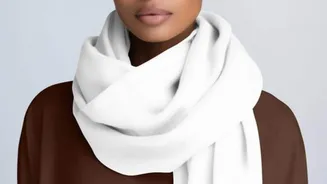
Tencel, also known as Lyocell, represents a modern advancement in fabric technology, positioning itself as a superior semi-synthetic option. Its origins lie in the pulp of wood, commonly eucalyptus trees, which is then processed into a fiber. This material is celebrated for its exceptional softness and luxurious drape, often drawing comparisons to silk, and is thus ideal for items like flowing dresses or smooth bed linens. The manufacturing process for Tencel is a significant environmental advantage. It employs a closed-loop system where nearly all the water and chemical solvents used in production are recovered and recycled, minimizing waste and resource depletion. Compared to conventional cotton cultivation, Tencel requires substantially less land and water, solidifying its status as an eco-conscious choice.
Linen: An Ancient Staple
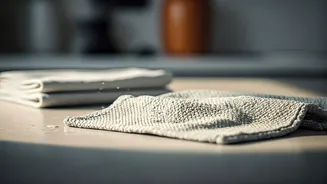
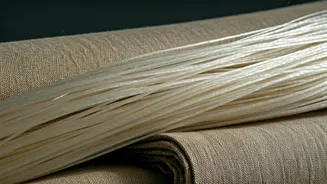
Linen, a fabric with a history spanning thousands of years, is derived from the flax plant and is recognized for its robust and breathable qualities. Flax is an exceptionally hardy plant, capable of thriving in less fertile soils and relying primarily on rainfall for hydration, thereby minimizing the need for extensive irrigation and pesticides. While linen possesses virtually no elasticity, leading to its characteristic tendency to wrinkle easily, these creases are often viewed as a hallmark of its natural origin in sustainable fashion circles. Its superior breathability makes it an indispensable material for warm climates. Moreover, linen is fully biodegradable, meaning that at the end of its long lifespan, it decomposes naturally, leaving no harmful residue behind, a testament to its environmental friendliness.
Pima Cotton: The Durable Choice
While cotton is a popular natural fiber, conventional varieties often require significant water and pesticide use. Pima cotton, also referred to as Supima, distinguishes itself as an Extra-Long Staple (ELS) cotton. The extended length of its fibers results in a fabric that is noticeably softer, more resilient, and holds its color vibrancy better than standard cotton. The primary sustainability advantage of Pima cotton lies in its longevity. Although it still necessitates water for cultivation, a Pima cotton garment can withstand wear and tear approximately 50% longer than a typical cotton item. Its resistance to tearing and pilling ensures that garments remain in good condition for extended periods, promoting a philosophy of purchasing fewer, higher-quality items that last. This focus on durability embodies the principle of mindful consumption.
Making Sustainable Selections
When considering your next clothing purchase, paying attention to the fabric composition on the care label is a valuable step towards more sustainable choices. For specific functional needs, such as high-intensity athletic activities or protection from the elements, synthetic fabrics do retain a role due to their unique performance characteristics. However, for general everyday wear and comfort, opting for natural and intelligently produced semi-synthetic materials offers significant benefits. Choose linen for its exceptional coolness in hot weather, Tencel for its luxurious feel and smooth drape, and Pima cotton for pieces you intend to cherish and wear for many years. Embracing these fabrics can lead to a noticeable positive impact on both personal comfort and the health of our planet.