
The Hidden Oil Culprits
Many of us diligently focus on reducing sugar or incorporating more vegetables into our diet when aiming for healthier eating. However, a significant factor
often overlooked is the quantity of cooking oil we use daily. This essential ingredient, from the initial tempering in curries to the richness in parathas, subtly elevates our fat intake without us always realizing the extent. The Food Safety and Standards Authority of India (FSSAI), through insights shared by liver expert Dr. Shiv Sarin, has highlighted that oil consumption frequently exceeds recommended levels. Unknowingly, individuals can end up consuming around 5 to 6 spoons of oil or ghee each day, a figure that escalates quickly considering each spoon contains approximately 5 grams of oil. This excess stems from both the visible fats we deliberately add during cooking and the hidden fats present in various processed foods and ingredients, making mindful consumption crucial for overall health.
FSSAI's Oil Recommendation
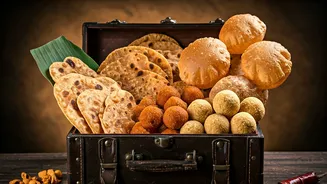
Dr. Shiv Sarin, a prominent liver specialist, has illuminated the optimal daily intake of oils, a guideline endorsed by the FSSAI. The core recommendation is to limit oil consumption to no more than 20% of your total daily calorie intake. This figure serves as a critical benchmark for maintaining a balanced diet and preventing the adverse health effects associated with excessive fat consumption. Dr. Sarin emphasizes that the perception of certain Indian food items, like a paratha, requiring generous amounts of ghee to be 'good', is a mindset that needs reevaluation. Beyond cooking oils, it's important to acknowledge that natural oils found in nuts such as peanuts, almonds, and walnuts are indeed beneficial for the body. Walnuts, in particular, are celebrated for their rich omega-3 fatty acid content, which plays a vital role in supporting cardiovascular health and reducing inflammation. Therefore, while reducing added oils is paramount, incorporating these nutrient-dense nuts in moderation can contribute positively to well-being.
Flavorful Oil-Free Dishes
For those inspired to reduce their cooking oil usage without compromising on taste, a range of delicious oil-free recipes offers a perfect solution. These dishes prove that vibrant flavors can be achieved through smart cooking techniques and a good blend of spices. Consider a classic Chicken Masala prepared using a slow-cooking method infused with aromatic spices, delivering that familiar rich, desi taste without any added oil. Similarly, a Fish Curry can be made both simple and delectable by allowing the fish to simmer in a tangy, spice-laden gravy, eliminating the need for oil to impart flavor. For a creamy and indulgent option, Tofu and Cashew Mayonnaise provides a dairy-free alternative that uses the richness of cashews and tofu to create a smooth texture perfect for sandwiches and dips. Even beloved dishes like Murgh Malaiwala can be lightened; this version skips the oil while retaining its signature softness and flavor through yogurt and spices. Lastly, for a taste of coastal cuisine, a Kanyakumari Fish Curry can be prepared with tamarind, fresh ingredients, and a medley of spices for a light yet aromatic experience, proving that healthy eating can be both satisfying and exciting.