




BHAVYA Scheme Opens
The Bharat Audyogik Vikas Yojna (BHAVYA) scheme, a substantial initiative with an allocation of Rs 33,660 crore, is set to officially open its doors for
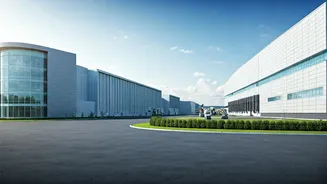
state applications from June 1. The primary goal of this program is to foster the development of one hundred specialized industrial parks across India. These parks are envisioned as 'plug-and-play' facilities, designed to be investment-ready from the outset, thereby simplifying the process for businesses to establish their manufacturing units. The Union Cabinet's approval on March 18 paved the way for this ambitious project, which has a six-year timeline, spanning from the fiscal year 2026-27 through to 2031-32, to achieve its objective of creating these critical industrial hubs.
Application Rounds Detailed
The Department for Promotion of Industry and Internal Trade (DPIIT) has laid out clear operational guidelines for the BHAVYA scheme, detailing a phased approach to selecting proposals. In the initial phase, the aim is to select a total of 50 proposals that meet the scheme's stringent criteria. This first phase will be further divided into two distinct selection rounds. The application window for the first round will be open from June 1 and will conclude on July 31, 2026, with the intention of selecting up to 20 proposals during this period. Following this, the second round of selection will commence on August 1 and will remain open until September 30, 2026. Importantly, any applicant whose proposal was not chosen in the first round will have the opportunity to resubmit their application, incorporating suitable improvements, for consideration in the subsequent round.
Land Requirements Vary
The BHAVYA scheme outlines specific land requirements for industrial park development, which differ based on the geographical location of the proposed park. For states that are not hilly regions, the minimum land parcel required for an industrial park to be considered under the scheme is a contiguous 100 acres. However, for hilly states, the northeastern regions, union territories, and states with a population under 1 crore, such as Himachal Pradesh, Uttarakhand, Arunachal Pradesh, Assam, Manipur, Meghalaya, Mizoram, Nagaland, and Goa, the minimum contiguous land requirement is significantly reduced to 25 acres. Within the overall target of 100 industrial parks, a specific provision allows for up to twenty parks to have a development area ranging from 500 to 1000 acres. For projects planning larger developments in phases, the funding support will be capped at a maximum of 1000 acres.
Land Provision and Evaluation
The acquisition and provision of land for these industrial parks under the BHAVYA scheme can be facilitated through various channels. Land can be provided by the State Government itself, by a private developer, through a joint venture between the State Government and a private entity, or even by a Central Public Sector Undertaking. Once proposals are submitted, they undergo a comprehensive evaluation process. This assessment focuses on several critical dimensions to ensure the parks are strategically located and well-equipped. Key evaluation criteria include the park's multi-modal connectivity, the suitability of its site, the quality of core infrastructure, value-added services, and social amenities as detailed in the Detailed Project Report (DPR). Furthermore, the strength of the existing industrial ecosystem and the presence of supportive policy enablers are also crucial factors in the selection process, ensuring that selected parks offer a conducive environment for industrial growth.