







Breaking the Mold
The plant kingdom is a testament to nature's boundless creativity, and nowhere is this more evident than in the evolution of leaves. While most plants
rely on their familiar green foliage for photosynthesis, some have embarked on extraordinary evolutionary journeys. These unconventional leaves have developed unique traits as a direct response to specific environmental pressures, showcasing remarkable strategies for survival. Whether it's a matter of defence, nutrient acquisition, or simply standing out, these botanical oddities demonstrate that evolution is a dynamic and often surprising process, pushing the boundaries of what a leaf can be and do when life is on the line.
The Cobra's Deception
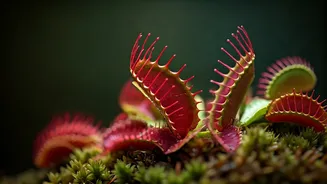
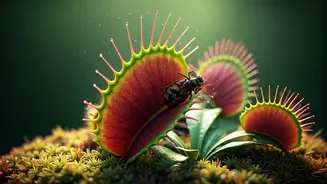
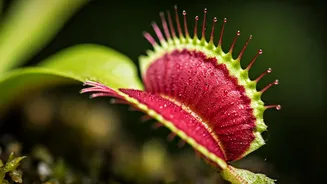
Imagine a plant that actively hunts! The Cobra Lily exemplifies this with its fascinating, hood-shaped leaves designed to mimic the head of a striking snake. This deceptive appearance isn't just for show; it's a sophisticated trap. Insects are drawn in by subtle cues, only to find themselves ensnared within the tubular structure. Once inside, downward-pointing hairs prevent any escape, and the plant then proceeds to digest its prey. This carnivorous adaptation allows the Cobra Lily to thrive in nutrient-poor environments by supplementing its diet with captured insects, demonstrating an incredible predatory strategy developed through evolution.
Ethereal Ghost Plant
The Ghost Plant presents an almost spectral appearance with its pale, nearly translucent leaves. This unusual characteristic stems from a complete absence of chlorophyll, the pigment responsible for the green colour in most plants and for photosynthesis. Instead of harnessing sunlight, the Ghost Plant has adopted a mycoheterotrophic lifestyle. It survives by forming a symbiotic relationship with fungi in the soil, drawing essential nutrients directly from them. This unique mode of existence gives the plant an eerie, ethereal glow, making it a true marvel of adaptation in the plant world.
Fiery Japanese Grass
Japanese Blood Grass offers a striking visual spectacle with its blades tipped in a vibrant, fiery red. This dramatic coloration makes the grass stand out distinctly, adding a unique aesthetic to any landscape. However, this striking beauty comes with a cautionary note. While visually appealing, the intense red pigmentation can sometimes be associated with related varieties that possess invasive tendencies and a high degree of flammability, serving as a subtle warning to those who admire its appearance.
Living Stone Camouflage
In the harsh landscapes of deserts, survival often depends on not being noticed, and Living Stones, or Lithops, have perfected this art. These remarkable plants boast thick, fleshy leaves that bear an uncanny resemblance to pebbles and rocks. This masterful disguise is their primary defence mechanism, effectively deterring herbivores eager to consume their succulent tissues. By blending seamlessly with their surroundings, Living Stones remain hidden and protected, showcasing one of nature's most ingenious examples of camouflage in the plant kingdom.
Witches' Hair Parasitism
Witches' Hair is a plant that barely resembles a leaf in the conventional sense; its appearance is more akin to a tangled mass of fine spaghetti. This unique morphology is integral to its parasitic lifestyle. Rather than photosynthesizing, Witches' Hair attaches itself to other host plants, drawing vital nutrients and sustenance directly from them. Remarkably, this parasitic plant possesses an ability to detect and identify suitable hosts, even by scent, before initiating its nutrient-stealing takeover, demonstrating a sophisticated predatory strategy.
Dramatic Black Leaves
The Black Elephant Ear stands out with its large, strikingly dark leaves, a significant departure from the typical green hue. While most leaves are verdant due to chlorophyll, this variety has been selectively bred to develop a deep, almost black pigmentation. This unusual coloration lends the plant a dramatic, almost gothic aesthetic, making it a captivating specimen. The dark pigment adds a unique visual dimension, proving that even the most fundamental plant structures like leaves can evolve for striking aesthetic impact alongside their functional roles.