






The Garlic Hair Remedy
Hair fall is a prevalent concern, especially in India, often exacerbated by environmental factors, stress, and lifestyle. When commercial products fall short,
home remedies like those involving garlic gain traction. The age-old question persists: is garlic oil or garlic juice the more effective solution for combating hair loss? Both can offer benefits, but their application and impact on the scalp differ significantly, making one potentially more suitable for individual needs than the other. Understanding these distinctions is key to choosing the right approach for consistent hair care and achieving desired results.
Why Garlic for Hair?
Garlic's inclusion in hair care stems from its rich composition of sulfur, selenium, and antioxidants, elements believed to bolster scalp health and fortify hair roots. Many also credit garlic with enhancing blood circulation to the scalp, which is fundamental for promoting robust hair growth. While it's not a miraculous cure, particularly for hair loss rooted in medical conditions like thyroid issues or severe nutritional deficiencies, garlic serves as a valuable complementary home treatment. Its natural properties have earned it a significant place in traditional Indian haircare practices for those seeking supportive solutions to hair fall.
Garlic Oil: The Gentler Approach
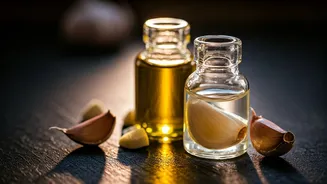
Garlic oil, typically created by infusing garlic cloves into carrier oils like coconut, olive, or castor oil, offers a milder alternative to raw garlic. This process tempers the intensity of garlic while retaining its beneficial compounds. For many, it's the more practical choice, seamlessly integrating into existing hair oiling routines common in India. The soothing sensation of massaging warm garlic oil can be relaxing, and it poses a lower risk of scalp irritation compared to pure juice. Moreover, the oil base provides essential moisture, which is crucial as dry scalps can worsen hair fall. While it might work more gradually than juice, its consistency and less abrasive nature make it ideal for dry, frizzy hair, mild hair fall, and regular scalp massages, requiring patience for visible results.
Garlic Juice: Potent but Intense
Garlic juice, derived from crushing fresh garlic cloves, is a potent, concentrated treatment. Many opt for it when targeting specific thinning areas or small bald patches due to its immediate, direct application. The belief is that its strength quickly reaches the scalp for a more aggressive treatment. However, this intensity comes with potential drawbacks. Garlic juice can cause scalp irritation, leading to redness, itching, or burning, particularly for those with sensitive skin. The distinct aroma also tends to linger longer. While some individuals dilute it with ingredients like aloe vera or onion juice and apply it a couple of times a week, it remains the more aggressive option, best suited for oily scalps that can tolerate stronger treatments and for those seeking rapid, targeted results on specific patchy areas, but not recommended for sensitive or dry, flaky scalps.
Oil vs. Juice: Which Reigns Supreme?
When deciding between garlic oil and garlic juice for hair fall, garlic oil generally emerges as the more user-friendly and sustainable option for most individuals. Its gentler formulation makes it easier to incorporate into a regular hair care regimen, offering a less aggressive yet consistent approach. While garlic juice might offer quicker results for some, its potential for scalp irritation makes it a riskier choice, especially for sensitive skin types. Ultimately, the key to managing hair fall effectively lies in consistent application rather than the sheer intensity of a treatment. A well-maintained, gentle routine often yields better long-term outcomes than sporadic, harsh interventions. Patience remains the most critical, though often the hardest, ingredient in any hair fall treatment journey.
Internal Factors Matter Most
It's crucial to understand that no topical remedy, whether garlic oil or juice, can completely resolve hair fall if underlying internal issues are at play. In India, common culprits for hair loss include nutritional deficiencies like low iron levels, the impact of crash diets, chronic stress, insufficient sleep, hormonal imbalances, and even the effects of hard water. Spending months on DIY remedies without addressing these fundamental health aspects may prove futile. Therefore, garlic treatments should be viewed as supportive measures, complementing a balanced diet, adequate rest, and professional medical advice when necessary. Relying solely on external applications without considering your body's overall health can limit their effectiveness.