



A Comet of Unprecedented Brightness
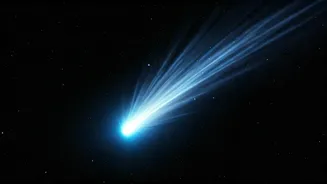
Skywatchers are buzzing about comet C/2026 A1, nicknamed MAPS, discovered by French amateur astronomers in January 2026. This celestial visitor belongs
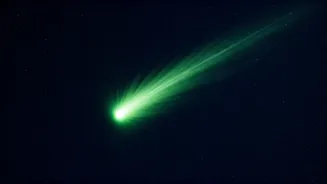
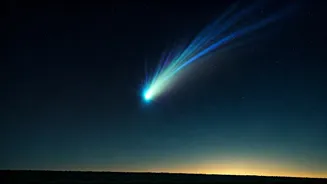
to the Kreutz sungrazer family, a group of comets known for their daring journeys incredibly close to the Sun. Unlike typical comets that maintain a safe orbital distance, sungrazers plunge towards our star. This proximity subjects them to intense solar heat, which vaporizes their icy composition, creating spectacular luminous displays. In fact, MAPS is predicted to become so bright that it could potentially outshine Venus, the brightest object in our night sky. If it survives its close solar encounter, this comet might even be visible to the naked eye, potentially observable even during daylight hours, distinguished by its unique turquoise tail.
Understanding Daring Sungrazers
The phenomenon of sungrazing comets, like MAPS, stems from a colossal parent body that likely shattered centuries ago. This ancient comet, estimated to be over 100 km wide, is thought to have fragmented around the 3rd or 4th century BCE. This cataclysmic event not only created two primary pieces but also countless smaller fragments, each embarking on its own journey. Over time, these fragments have returned to the inner solar system, some creating breathtaking spectacles. A prime example is the Great Comet of 1882, which reached a brightness 100 times that of a full Moon and dominated the sky for an extended period. However, the daring approach to the Sun carries a significant risk; the extreme solar forces can, and often do, completely disintegrate these comets, making their survival uncertain.
Viewing Opportunities in India
Comet MAPS is slated to reach its perihelion, its closest point to the Sun, on April 4–5, 2026. During this phase, it will skim approximately 170,000 km above the solar surface. Should it successfully navigate this perilous solar passage, observers worldwide can anticipate a spectacle rivaling Venus in brilliance. For viewers in India, particularly those in the southern regions, the prime viewing window will be in early April, approximately 30–45 minutes after sunset. The comet is expected to be visible low in the southwest. While binoculars or small telescopes are recommended to enhance the viewing experience and mitigate solar glare, the comet's predicted brightness might make it discernible to the naked eye. Those in northern parts of India may face more challenges due to horizon obstructions. To aid in locating the comet, astronomy apps like Stellarium can be incredibly useful tools.