




A Unified Charging Solution
The Union Minister for Heavy Industries, H.D. Kumaraswamy, has introduced a transformative new platform called Unified Bharat e-Charge, designed to revolutionize
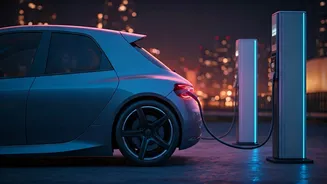
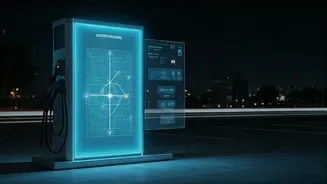
electric vehicle (EV) charging payments across India. This pioneering initiative is envisioned as a 'UPI for EV charging,' aiming to create a singular, convenient payment and access interface for EV owners. The core idea behind this platform is to eliminate the current fragmentation where EV users often need multiple apps or payment methods for different charging stations. With Unified Bharat e-Charge, users will be able to locate available charging points, check their status, and complete payments through one integrated system, irrespective of the charging network provider. This development is a significant stride towards making EV ownership more accessible and user-friendly, directly addressing one of the key hindrances to the widespread adoption of electric vehicles in the country. The platform is slated to bring together various charging station operators and payment gateways to ensure a smooth and hassle-free experience for all electric vehicle users, fostering greater confidence and convenience in the burgeoning EV ecosystem.
Empowering EV Adoption
Unified Bharat e-Charge is a significant government-backed initiative, supported by the National Payments Corporation of India (NPCI), that aims to establish a 'one nation, one app' system for electric vehicle charging. Built upon open protocols and developed by Bharat Heavy Electricals Ltd (BHEL), this platform will provide users with real-time information on charger availability, ownership, power output, and precise location. This transparency allows EV users to access any participating charger, regardless of who operates the charging station. Minister Kumaraswamy drew a parallel between the revolutionary impact of UPI on digital payments and the potential of Unified Bharat e-Charge to transform EV charging. The launch signifies a strategic shift in India’s electric mobility approach, moving beyond merely increasing the number of charging stations to creating a cohesive digital layer that ensures all chargers are easily discoverable and accessible through a unified interface. This initiative is expected to significantly accelerate the adoption of electric vehicles by removing the friction associated with charging, thereby contributing to India's climate goals and reducing carbon emissions.
Phased Rollout & Infrastructure
The Unified Bharat e-Charge platform is set to be implemented in phases, with an initial focus on major urban centers and key national highways to ensure widespread initial coverage. The government has outlined ambitious plans for charging infrastructure, aiming for approximately 72,000 public chargers by 2030, including specialized chargers for two- and three-wheelers, passenger vehicles, and larger commercial vehicles. Significant progress has already been made under the PM E-DRIVE scheme, with substantial funding sanctioned for the installation of thousands of chargers across various states and public sector enterprises. While the deployment of chargers is progressing, ensuring seamless grid connectivity for these new installations remains a primary implementation challenge. Currently, India boasts over 67,000 chargers, encompassing both public and private facilities, with a substantial number of these being fast chargers. The ongoing efforts are geared towards ensuring that EV owners can find a charging station conveniently located, ideally within a 30 km radius on major highways, further solidifying the accessibility of electric mobility.
State Leadership & Industry Collaboration
Karnataka has emerged as a frontrunner in India's electric mobility drive, significantly contributing to the national EV push. The state currently hosts the highest number of charging stations in the country, with over 8,600 operational units. Furthermore, under the PM E-DRIVE scheme, Karnataka has received approval for an additional 1,243 chargers, bolstered by central financial support amounting to ₹123.26 crore. This commitment is reflected in the impressive growth of EV sales in Karnataka, which have seen a remarkable 17-fold increase between FY21 and FY26, demonstrating a compound annual growth rate of 76.15% and an EV penetration rate of 13.65% in FY26. The success of Karnataka highlights the importance of collaborative efforts between state governments, central agencies, and private entities in building a robust EV ecosystem. This synergistic approach is crucial for the broader adoption of electric vehicles and achieving national environmental targets.
Commercial Vehicles & Energy Security
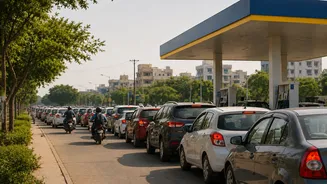
Electrifying commercial vehicles, particularly trucks, is central to India's strategy for reducing oil imports and enhancing energy security. Despite accounting for only 3% of vehicles on Indian roads, trucks consume a substantial 42% of the nation's diesel. To address this, the government has identified key highway and city corridors for the deployment of high-capacity chargers, specifically designed for electric buses and trucks. These chargers, rated at 242–360 kW, will cater to both vehicle categories. However, financing remains a significant hurdle for operators of electric buses and trucks, who often face higher interest rates from lenders. The ministry is actively exploring solutions such as an interest subvention scheme and a partial credit guarantee mechanism to alleviate these financial challenges and encourage the transition to electric commercial fleets.
Oil Companies as Charging Hubs
Traditional fuel retailers are rapidly transforming into integral components of India's expanding national charging network. Major oil marketing companies are investing heavily in establishing charging infrastructure at their existing fuel stations. Bharat Petroleum Corporation Ltd (BPCL) has already established over 225 'Bharat Charging Stations' and plans to expand its network to over 400 highways this year, ensuring a charging station is available every 100 km on major routes. Indian Oil is operating approximately 6,000 DC fast chargers and 1,450 battery-swapping stations specifically for two- and three-wheelers. Hindustan Petroleum Corporation Ltd (HPCL) emphasizes that beyond deployment, the focus is shifting towards ensuring the maintenance and consistent uptime of charging stations, which are becoming key differentiators in the competitive landscape. This strategic adaptation by oil companies is vital for providing convenient and widespread charging options for EV users.
Automakers & User Experience
Automakers are actively developing sophisticated tools and offering assurances to enhance the electric vehicle ownership experience, often anticipating the needs that platforms like Unified Bharat e-Charge aim to formalize nationally. For instance, one leading automotive manufacturer aggregates over 30,000 chargers from partner networks through its dedicated app, while offering a lifetime battery warranty to alleviate range anxiety among consumers. Manufacturers are also leveraging connected-car data since 2023, sharing insights with oil marketing companies and charging operators. This data-driven approach helps in strategically placing charging stations based on actual driving patterns, moving beyond mere assumptions. While charger availability is increasingly being addressed, the critical challenge of charger reliability—ensuring chargers function correctly when needed—remains a paramount concern for EV users. Furthermore, a significant majority of EV charging still occurs at home or workplaces, highlighting the need for policies that support this prevalent charging behavior.
Addressing Home Charging Challenges
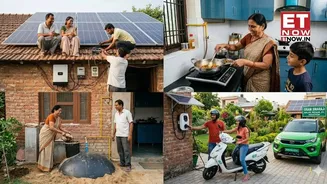
A substantial portion of electric vehicle charging, nearly 90%, currently takes place within residential or workplace settings, yet policy attention often disproportionately focuses on public charging infrastructure. This imbalance creates a challenge, especially for urban residents living in apartment complexes where housing societies can pose significant obstacles to installing home chargers. To address this, there is a growing advocacy for a statutory 'right to charge,' which would legally empower EV owners to install home charging solutions, akin to their right to access electricity connections. Resolving both public charging accessibility and home charging feasibility is considered essential for achieving ambitious EV penetration targets. Focusing solely on public charging will not be sufficient to drive the widespread adoption of electric vehicles needed to meet national climate objectives.