



Lunar Program Evolution
The journey to the Moon has seen significant programmatic shifts over the decades, with each endeavor facing unique challenges and political climates.
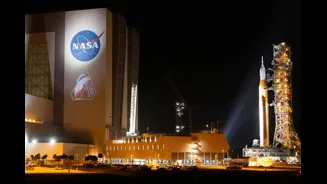
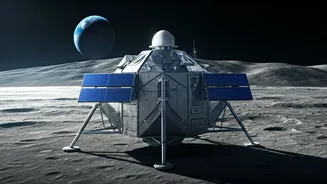
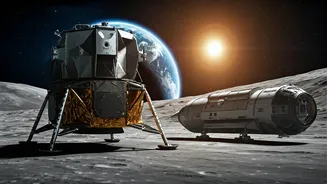
Early attempts like the Space Exploration Initiative (1989) faltered under immense cost and a lack of steadfast congressional backing, while the Vision for Space Exploration (2004) struggled with inconsistent White House funding, ultimately leading to its abandonment. Artemis, despite its current momentum and survival through presidential transitions, is also undergoing significant architectural changes. Recent adjustments suggest a potential departure from initial plans, such as targeting the lunar south pole and reassessing the necessity of the Gateway lunar station, which has already seen substantial congressional investment. This evolving strategy, coupled with proposed reliance on commercial launch providers and congressional directives for future missions, presents a notable degree of uncertainty for a program slated for lunar landings within a few years. This contrasts sharply with the Apollo program, which solidified its architectural framework remarkably early, by 1962, seven years before its historic landing. The commitment to a lunar orbit rendezvous strategy and the timely awarding of contracts for critical components like the command and service modules and lunar lander in the early 1960s provided a stable foundation, allowing NASA and its partners to concentrate on overcoming the immense engineering hurdles.
Funding Disparities Revealed
A striking contrast emerges when examining the financial backing provided to NASA's lunar programs across different eras. While Artemis is often discussed in the context of a new 'space race,' its actual funding levels paint a picture of a more measured approach. On average, NASA has allocated approximately $6 billion annually (in 2025 dollars) towards Artemis components, with a recent peak of nearly $10 billion, representing about 40% of NASA's total budget. This level of investment, while substantial, pales in comparison to the peak annual spending of the Apollo program. Adjusted for inflation, Apollo commanded an impressive $42 billion per year during its zenith, a figure that does not even account for the extensive buildout of major facilities and infrastructure. Over its 12-year duration, the United States invested over $300 billion (in 2025 dollars) in Apollo. In stark contrast, Artemis has consumed roughly one-third of that cumulative amount to date.
Science and Workforce
The disparities between the Artemis and Apollo programs extend beyond financial investment to encompass scientific exploration and the development of NASA's internal capabilities. During the Apollo era, NASA proactively launched 21 robotic missions to the Moon over a seven-year span, costing $12 billion (in 2025 dollars). These missions were crucial for thoroughly characterizing the lunar surface and rigorously testing landing systems, laying essential groundwork for the crewed landings. In contrast, the Artemis program has largely depended on commercial entities to deliver scientific instruments, with a budget of $3.5 billion allocated for two successful landings within a comparable timeframe. Furthermore, the impact on NASA's workforce has been vastly different. The Apollo program saw a remarkable expansion, with NASA's civil servant headcount nearly tripling to 36,000 within its initial five years. Conversely, recent reports indicate NASA's workforce has experienced reductions, and the agency is tasked with returning to the Moon with a staff size not seen since 1960, presenting a significant challenge to achieving sustained lunar presence and ambitious scientific goals.
Strategic Differences
While direct comparisons between Artemis and Apollo might seem imperfect due to advancements in technology and the presence of a robust private sector today, the fundamental differences in program stability and national commitment are significant. Apollo achieved a crucial architectural lock by 1962, seven years before its first landing, enabling focused engineering efforts. Artemis, however, is still navigating its program architecture and defining its needs. The 'space race' framing for Artemis, while appealing, is undermined by its funding reality, which is more akin to a deliberate exploration than a sprint. This framing also risks jeopardizing the very elements that distinguish Artemis from Apollo: fostering durable international partnerships, achieving rich scientific returns, exploring potential resource utilization at the lunar south pole, and establishing a program designed for long-term sustainability. Apollo's success was defined by its victory in a race, but the program concluded just three years later, a trajectory Artemis aims to decisively avoid by building a more enduring presence beyond its initial missions.