





What Are Fingerprints?
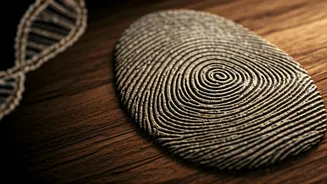
Fingerprints are intricate patterns of raised lines, known as dermal ridges, found on our fingertips, palms, toes, and soles. These distinctive formations
primarily fall into three categories: loops, whorls, and arches. Interestingly, among mammals, only primates and koalas possess these features, despite their vastly different evolutionary paths. This shared trait, appearing in unrelated species, is a compelling example of convergent evolution, suggesting a powerful selective advantage driven by similar environmental pressures, such as the need for enhanced grip when navigating arboreal environments.
How Fingerprints Form
The development of fingerprints begins surprisingly early in gestation, around the tenth week of pregnancy, on temporary swellings on the fetal fingertips called volar pads. Rather than being solely dictated by a rigid DNA blueprint, these unique patterns emerge from a complex interplay of physics and biological growth. Mathematical models, like those proposed in a 2005 study, suggest that stress buckling within the skin layers is the primary driver, forming ridges perpendicular to areas of maximum compression. The precise shape of the volar pad itself then influences whether the resulting pattern will be a whorl, a loop, or an arch, leading to the individual and distinct ridges that characterize each person's prints.
Enhanced Grip Mechanics
The ridged structure of fingerprints plays a crucial role in optimizing grip, particularly in dynamic conditions. These patterns cleverly manage skin moisture, a vital adaptation for primates navigating tree branches. On drier surfaces, the ridges increase friction, providing a more secure hold. Conversely, in wet conditions, the furrows formed by the ridges act to channel away excess moisture, preventing slippage. A 2020 study published in PNAS demonstrated this self-adjusting capability, highlighting its importance for arboreal species that require a reliable grasp to prevent falls, an essential evolutionary advantage for survival in forest habitats.
Boosting Touch Sensitivity
Beyond improving grip, the dermal ridges on our fingertips significantly enhance our sense of touch. These raised patterns act as conduits, channeling vibrations from the skin's surface directly to the nerve receptors located beneath. This focused transmission sharpens our ability to perceive textures with greater detail, enabling us to distinguish subtle differences, such as the ripeness of fruit or the fine details of a tool. The increased contact area provided by the ridges also contributes to a higher resolution of sensory input, proving invaluable for tasks ranging from foraging to intricate manual work. This heightened sensitivity extends to the palms and soles as well, contributing to a more nuanced tactile experience across the entire body.
Modern Identification Utility
While evolution originally sculpted fingerprints for practical purposes like climbing trees and grasping food, their utility has expanded far beyond their initial design. These ancient adaptations now serve as remarkably effective tools for personal identification in the modern world, a testament to their enduring evolutionary advantage. The unique nature of each fingerprint, arising from a complex developmental process in the womb, remains stable throughout an individual's life and is resistant to minor damage. This inherent distinctiveness, so profound that no two individuals, not even identical twins, share the same pattern, makes them ideal for security systems, biometric scanners, and forensic investigations, a remarkable repurposing of an ancient biological trait.