







Gion: Echoes of Edo
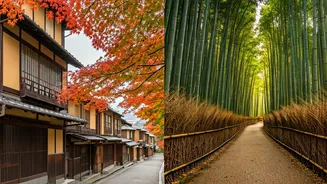
Step into Gion, Kyoto's iconic geisha district, where the spirit of the Edo period thrives. Wander through atmospheric streets lined with traditional wooden
machiya houses and discover the refined world of geiko and maiko, Kyoto's 'women of the arts'. Explore the historic Yasaka Shrine, a vibrant testament to ancient beliefs, and immerse yourself in the neighborhood's rich cultural tapestry. Gion's charm extends to its strategic location, offering proximity to the Kamo River and easy access to other key areas, making it an ideal base for exploring the city's historical heart.
Higashiyama: Timeless Beauty
Higashiyama, translating to 'eastern mountains,' invites you on a scenic stroll through history. This district is famed for the majestic Kiyomizu-dera Temple, perched on a hillside and offering breathtaking city vistas, especially during autumn. The winding lanes of Sannen-zaka and Ninen-zaka beckon with artisan shops and culinary treats, from soba noodles to sweet mochi. Further along, the Philosopher's Path offers a tranquil canal-side walk, particularly enchanting amidst spring cherry blossoms. For a more contemplative experience, Sanjūsangen-dō, with its 1,001 Kannon statues, provides a serene escape from the urban bustle.
Ponto-chō: Evening Delights
As dusk settles, Ponto-chō awakens, a narrow, lantern-lit alley along the Kamo River that pulses with energy. This vibrant district is a haven for food and drink enthusiasts, offering everything from casual yakitori to exquisite kaiseki meals. During warmer months, the riverside restaurants extend with 'kawayuka' terraces, providing a picturesque setting for dining. Once a geisha hub, Ponto-chō retains its allure for late-night entertainment, boasting jazz clubs and sophisticated cocktail bars that continue the tradition of sophisticated nocturnal enjoyment.
Fushimi: Sacred Gates
Venture to Fushimi, a district deeply rooted in Shinto traditions, most famously represented by the Fushimi Inari-Taisha shrine. This sacred site is renowned for its thousands of striking vermilion torii gates, creating an iconic pathway winding up Mount Inari. The shrine, dedicated to the god of rice and prosperity, offers a challenging yet rewarding hike to its summit, revealing panoramic city views and smaller, sacred altars. Nearby, a replica of Fushimi-momoyama Castle stands as a historical echo, offering a peaceful suburban retreat, particularly captivating during the cherry blossom season.
Nakagyō: Castle and Cuisine
At the heart of Kyoto lies Nakagyō, a ward that bridges historical grandeur with culinary exploration. It's home to Nijō Castle, a magnificent example of Edo-period architecture, featuring 'nightingale floors' designed to alert residents of intruders and surrounded by a serene landscape garden. Adjacent to this historical marvel is Nishiki Market, affectionately known as 'Kyoto's Kitchen,' a bustling arcade overflowing with fresh produce, local delicacies, and artisanal goods. Nakagyō also boasts a high concentration of Michelin-starred restaurants, catering to every palate with diverse culinary offerings.
Arashiyama: Bamboo Serenity
Journey to the western outskirts to discover Arashiyama, an area synonymous with its ethereal bamboo grove. Walking through this natural wonder is an immersive experience, evoking a sense of profound tranquility. Beyond the towering bamboo, the district features the scenic Togetsukyo Bridge, the UNESCO-recognized Tenryu-ji Temple with its exquisite garden, and the Iwatayama Monkey Park, offering playful encounters with local wildlife and stunning panoramic views of the city and surrounding mountains.
Downtown: Urban Pulse
For a taste of contemporary Kyoto, the downtown area, centered around Kawaramachi and Shijo streets, is the place to be. This vibrant hub is a shopper's paradise, packed with department stores, trendy boutiques, and diverse dining options. Nishiki Market, often referred to as 'Kyoto's Kitchen,' is a must-visit here, offering a sensory feast of local street food and fresh ingredients. The energy of this district provides a lively contrast to Kyoto's more traditional enclaves.
Northern Kyoto: Golden Views
Northern Kyoto is a treasure trove of iconic landmarks, most notably Kinkaku-ji, the resplendent Golden Pavilion. This Zen Buddhist temple, adorned with gold leaf, shimmers against its backdrop of meticulously maintained gardens, creating a postcard-perfect scene. Nearby, Ryoan-ji Temple presents a different kind of beauty with its famous, enigmatic Zen rock garden, a minimalist masterpiece that invites quiet contemplation and reflection on the nature of simplicity and existence.
Southern Kyoto: Statues and Foliage
Southern Kyoto is home to significant spiritual and historical sites. Tofuku-ji Temple is particularly celebrated for its breathtaking autumn colors, best viewed from the Tsutenkyo Bridge. Equally awe-inspiring is Sanjusangen-do Temple, a vast hall housing an astonishing 1,001 statues of Kannon, the goddess of mercy. The sheer scale and artistry of these figures create a deeply moving and unforgettable visual experience for visitors seeking spiritual connection.
Nishijin: Textile Heritage
Immerse yourself in Kyoto's rich textile heritage in the Nishijin district. Historically the center for exquisite weaving, this area is renowned for its intricate techniques used in creating luxurious kimonos and obi sashes. While many traditional workshops continue their craft, the Nishijin Textile Center offers an excellent opportunity to witness live demonstrations and appreciate the artistry involved. It's a place where centuries-old traditions are preserved and celebrated, showcasing the skill and dedication of Kyoto's artisans.