



Date's Rich Sweetness
Long before refined sugar dominated kitchens, dates served as a primary natural sweetener, a practice deeply rooted in both Indian and Middle Eastern culinary
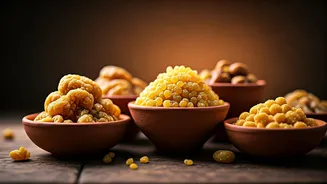
traditions. Whether presented as a rich syrup or a finely powdered sugar, date-based sweeteners impart a distinctive, full-bodied sweetness. They are incredibly versatile, finding their way into a variety of preparations, from comforting porridges and decadent sweets to special festive dishes. Their inherent flavor profile adds a delightful depth that processed sugars simply cannot replicate, making them a valuable component for those seeking more wholesome ingredients in their cooking and baking endeavors. The natural sugars present in dates also offer a complex sweetness that evolves beautifully when cooked.
Honey's Golden Touch
Honey, known as 'Shehad' in India, has been an integral part of the nation's diet and Ayurvedic practices for millennia. Sourced locally, this golden elixir brings more than just sweetness; it introduces subtle floral notes and a complex depth of flavor to various culinary applications. It is a beloved addition to warming teas and traditional 'kadhas' (herbal decoctions), and frequently finds its way into homemade desserts. Beyond its taste, honey is revered in home remedies for its natural properties, making it a preferred choice for those aiming for natural well-being. Its liquid form allows for easy integration into beverages and baked goods, while its raw, unprocessed nature preserves its beneficial compounds, offering a holistic sweetening experience.
Jaggery: The Unrefined Gem
Jaggery, or 'Gur'/'Gud', is a staple in Indian kitchens, crafted by boiling sugarcane juice or sap from palm trees until it crystallizes into a solid block. What sets jaggery apart from refined sugar is its minimal processing, which allows it to retain a wealth of natural minerals and a rich, molasses-like flavor profile. This deep, caramel-esque taste makes it a highly sought-after ingredient, not only for traditional Indian sweets like 'ladoos' and 'patties' but also as a sweetener for everyday beverages, including tea and coffee. Its presence even extends to some savory dishes, where it provides a balancing sweetness. The unrefined nature of jaggery contributes to its complex flavor and slightly darker hue compared to white sugar.
Coconut Sugar's Subtle Charm
Originating from the sap of the coconut palm, coconut sugar is gaining popularity, particularly in urban Indian households, as a refined sugar substitute. It possesses a delicate caramel essence that is less pronounced than jaggery, allowing it to blend seamlessly into a wide array of dishes without overpowering other flavors. This subtle sweetness makes it an excellent choice for desserts, a delightful addition to morning coffee, and a versatile ingredient in contemporary Indian recipes. Its granular texture is similar to granulated sugar, making it an easy one-to-one replacement in many baking and cooking scenarios. The growing awareness of its natural origins and nuanced flavor profile is driving its adoption.
Khandsari: Earthy Sweetness
Khandsari sugar represents a traditional, less refined approach to processing cane sugar, utilizing age-old methods that preserve more of the natural sugarcane goodness. Visually, it resembles regular granulated sugar but contains residual molasses, which imbues it with a distinct, mild, and earthy sweetness. This characteristic makes khandsari a favored choice for those who appreciate a more nuanced flavor in their sweet preparations. It integrates beautifully into Indian baking, adding a subtle depth to cakes and cookies, and is also well-suited for sweetening beverages like lassi and traditional Indian drinks. Its production process is a testament to preserving traditional food practices.
Palm Jaggery's Bold Flavor
Palm jaggery, referred to as 'Tadgud' or 'Karupatti', is derived from the sap of palm trees and is particularly cherished in the southern and coastal regions of India. This sweetener is distinguished by its darker coloration and a more robust, intense flavor compared to standard jaggery. Its rich taste makes it an exceptional ingredient for traditional South Indian desserts, such as 'payasam' and 'halwa', and it also lends a unique depth to beverages like coffee and herbal teas. The distinct character of palm jaggery offers a more pronounced sweetness and a complex flavor profile that enhances the authenticity of regional recipes and culinary traditions.