






Revised Artemis Timeline
Following the successful Artemis 2 crewed flight around the moon, the focus has firmly shifted to lunar surface exploration. NASA has recently unveiled
an updated strategy for the Artemis 3 mission, moving a crewed Earth orbit test from 2028 to late 2027. This shift means the initial lunar landing attempt will now be deferred to Artemis 4 in late 2028. The Artemis 3 mission will serve as an Earth-orbit rendezvous, where NASA's spacecraft will link up with one or both of the developing lunar landers. This approach mirrors the strategy employed during the Apollo era with the Apollo 10 mission, which conducted a lunar orbit rehearsal before the actual landing. The success of this revised plan critically depends on the rapid progress and timely completion of work by NASA's private sector partners.
SpaceX's Starship Challenge
SpaceX, under the leadership of Elon Musk, is developing its Starship Human Landing System (HLS) for NASA's lunar ambitions. Selected in 2021, the HLS is a specialized configuration of the Starship vehicle, comprising the powerful Super Heavy booster and the Starship upper stage. As of October of the previous year, SpaceX reported significant advancements in crucial subsystems, infrastructure, and operational readiness for lunar landings. These milestones include testing lunar life support systems, Raptor engine cold start capabilities, throttle tests for lunar landings, software development, debris protection measures, and airlock and elevator functionality. However, the paramount challenge remains demonstrating consistent Starship flights and mastering in-orbit docking and propellant transfer, which are essential for fueling the HLS for its journey to the moon. This requires a high launch cadence for multiple tanker missions to supply sufficient propellant.
Starship Flight Testing
Over the past three years, SpaceX has conducted 11 suborbital test flights of Starship. The upcoming 12th flight is slated to debut the more robust Starship V2, equipped with advanced V3 Raptor engines, designed for orbital operations and carrying payloads. Through its extensive flight testing, SpaceX has achieved several key development goals, such as reigniting engines in space, showcasing payload deployment, and successfully executing booster recoveries using its distinctive 'chopstick' mechanism. Yet, substantial hurdles remain, including reaching and sustaining Earth orbit, and crucially, proving orbital refueling capabilities. This involves demonstrating propellant transfer between two Starship upper stages, a prerequisite for the HLS to have enough fuel for its translunar trajectory. The ongoing need to verify long-duration life support systems for astronauts further adds to the complexity of SpaceX's development roadmap.
Blue Origin's Blue Moon
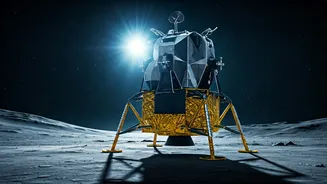
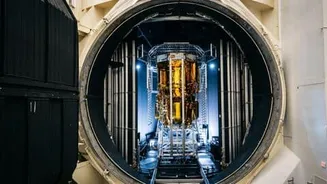
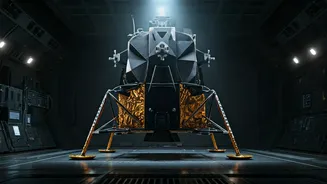
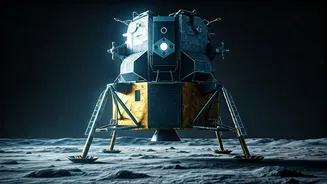
Blue Origin is developing its Blue Moon Mk2 crewed lunar lander, which was selected in 2023 and is currently targeted for the Artemis 5 mission. However, the recent adjustments to NASA's Artemis schedule have created an opportunity for an earlier lunar landing, provided Blue Moon can be prepared in time. Unlike SpaceX's integrated approach, Blue Origin is adopting a phased strategy, starting with an uncrewed cargo lander before proceeding to a crewed variant. The immediate critical step for Blue Origin is the launch of the smaller Blue Moon Mark-1 (Mk1) cargo lander, which has recently completed vacuum chamber testing and is expected to head to the moon later this year. A significant obstacle for this endeavor is the current grounding of Blue Origin's New Glenn launch vehicle due to a recent anomaly.
Path to Lunar Landing
The successful readiness of the New Glenn launcher and the uncrewed Mk1 lander, coupled with a flawless lunar landing demonstration, are vital for Blue Origin's future lunar missions under the Artemis program. Similar to the requirements for Starship HLS, Blue Origin must also develop and rigorously test the life support systems for its crewed Blue Moon Mk2 lander. While the company generally maintains a low profile regarding program updates, recent congressional testimonies have shed some light on their progress. During a House Committee on Appropriations hearing on April 27, NASA Administrator indicated that both SpaceX and Blue Origin have affirmed their commitment to meeting the agency's requirements for a late 2027 rendezvous, docking, and interoperability tests of both landers in anticipation of a 2028 landing attempt.
The Lander Race
NASA has stated its intention to proceed with the lander that proves ready by late 2027 for the Artemis 3 mission. This competitive scenario puts both SpaceX and Blue Origin in a race against time. The outcome of this race could potentially determine which company earns the distinction of transporting astronauts to the lunar surface on the Artemis 4 mission, marking a pivotal moment in humanity's return to the moon.