
Unexpected Seed Source
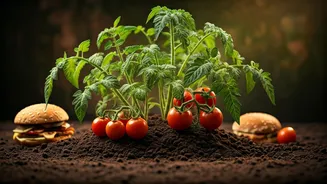
A fascinating gardening venture took root from an unlikely source: a fast-food cheeseburger. James Prigioni, a popular gardening influencer, embarked on an experiment
that captured widespread attention, proving that nature can thrive even from processed food components. Instead of discarding the tomato slices from his Quarter Pounder with Cheese Deluxe, he decided to see if they could sprout new life. Prigioni documented this intriguing process in a YouTube video, detailing his journey from planting the burger's tomato remnants to witnessing the growth of genuine tomato plants. The outcomes were so remarkable that they even astonished him, underscoring the surprising potential of gardening with unconventional materials.
Planting Methods
The experiment involved two distinct approaches to cultivate plants from the burger's tomato components. In one method, Prigioni carefully extracted two seeds directly from a tomato slice. These seeds were then planted in a small cup, initiating their growth cycle in a controlled environment. The second method was even more direct: he took an entire tomato slice and planted it straight into the soil. This dual approach allowed for a comparative study, observing whether starting from seeds or a whole slice would yield more successful results in terms of germination and subsequent plant development.
Outdoor Transition
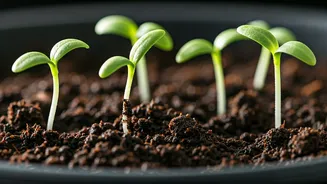
After a period of 23 days, both planting methods showed promising signs of life, with sprouts emerging from both the seeds and the direct slice planting. At this stage, Prigioni decided to move the young plants to an outdoor setting to allow them to grow more robustly. The plant that originated from seeds was placed in a bucket, while the one started from the full tomato slice was planted directly into the ground. Despite facing challenges, such as the bucket plant not receiving adequate watering during several intensely hot days, it demonstrated remarkable resilience and continued its growth trajectory, eventually producing tomatoes.
Early Fruiting
Remarkably, by the 94th day of the experiment, the plant housed in the bucket had already begun to bear fruit. Prigioni theorized that this early production of tomatoes might be a direct response to the stress the plant had endured, particularly from the periods of insufficient watering during hot weather. This suggests that plants, under certain conditions of mild adversity, might accelerate their reproductive cycle to ensure survival and propagation, a phenomenon that added another layer of intrigue to the experiment's results.
Abundant Harvest
The plant that began its life from a whole tomato slice taken directly from the burger offered an even more astonishing spectacle. By day 108, this particular plant was laden with dozens of tomatoes that were visibly ripening on its branches. Prigioni expressed his profound surprise, stating that while he anticipated growth, the sheer volume of fruit produced by a single plant was unprecedented in his gardening experience. He described it as a truly unique outcome, transforming a component of a fast-food meal into a prolific source of fresh produce, a testament to the power of germination and plant biology.
Tomato Characteristics
Upon harvesting, Prigioni proceeded to taste-test the tomatoes. He characterized their flavor profile as possessing a mild sweetness with an absence of acidity, making them exceptionally pleasant to eat in large quantities. Interestingly, he noted that the smaller tomato, harvested from the bucket plant, offered a slightly sweeter taste. He also made an important observation regarding the genetic nature of these tomatoes, explaining that due to their origin from a processed burger, they are likely hybrids. This means that each plant might exhibit unique growth patterns and produce fruit that doesn't necessarily replicate the exact characteristics if seeds were saved and replanted.
Ripening Challenges
As the experiment progressed to day 121, the tomato plant that was grown directly in the ground displayed numerous large tomatoes. However, a notable observation was that these fruits had not yet reached full ripeness. Prigioni attributed this delay in ripening to the hybrid nature of the plants. He explained that hybrid varieties can sometimes lose the consistent characteristic of even ripening across all fruits, leading to some tomatoes maturing slower than others, a common occurrence in complex plant genetics.
Motivation and Impact
Prigioni shared that his primary motivation for undertaking this experiment was the sheer enjoyment and curiosity it offered. Beyond the personal satisfaction, he found that the project had a surprisingly positive impact on his broader gardening efforts. The excitement of observing the burger-originating tomatoes spurred him to spend more time in his garden, which in turn led him to pay closer attention to his entire collection of plants. The ability to take a component from a simple cheeseburger, cultivate it into a thriving plant, and then harvest a substantial yield of tomatoes provided a uniquely refreshing and engaging experience, highlighting the wonders of nature.